

 Round
Round Princess
 Oval
Oval Cushion
 Emerald
 Marquise
 Pear
Pear Radiant
 White Gold
 Yellow Gold
 Rose Gold
 Platinum
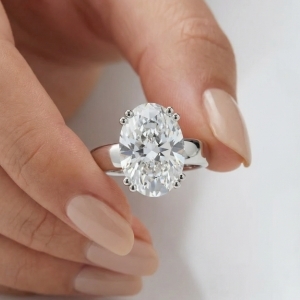 Engagement Rings
 Black Gold
 Tungsten
 Platinum
 Two Tone
 Wedding Rings
 Fine Jewelry
 Diamond Studs
 Silver
 Up To 80% Off
 JAN | Garnet
 FEB | Amethyst
 MAR | Aquamarine
 APR | Diamond
 MAY | Emerald
 JUN | Pearl
 JUL | Ruby
 AUG | Peridot
 SEP | Sapphire
 OCT | Opal
 NOV | Citrine
 DEC | Topaz
 Find The Perfect Gift
 Two Tone
Budget-Friendly Engagement Rings Under $1,000: A Smart Buyer's Guide
May 9, 2026
Finding a beautiful engagement ring under $1,000 is more achievable today than at any point in the last decade. Lab-grown diamonds, moissanite, and direct-to-consumer jewelry brands have reshaped what's possible at this price point. The challenge isn't finding a ring, it's knowing what trade-offs to make and where to invest your budget for the most visible impact.
Pompeii3 is a family-owned, direct-to-consumer jewelry brand that has been designing and selling fine diamond and gemstone jewelry for over 50 years. This guide is designed to help you find the right affordable engagement ring, covering everything from stone selection to metal choices to what to look for before buying.
Why $1,000 Is a Workable Budget for an Engagement Ring
A 2023 survey by The Knot found the average U.S. engagement ring spend sits around $5,800. But average spending doesn't reflect what's available at a lower price point. Plenty of stunning, well-crafted rings fall well under $1,000, particularly if you know which categories to explore.
The biggest shift in recent years has been the growth of lab-grown diamonds. According to Paul Zimnisky Diamond Analytics, lab-grown diamond sales now account for roughly half of all diamond jewelry sold in the United States by unit volume. These diamonds are chemically, physically, and visually identical to mined diamonds but cost 50-80% less. That means you can find a 1-carat certified lab-grown diamond engagement ring for under $1,000 that would cost $4,000 or more with a mined stone.
Understanding Your Stone Options
Your stone choice is where $1,000 gets stretched or spent quickly. Here is how each option plays out at this price point.
Lab-Grown Diamonds
Lab-grown diamonds are graded by the same labs as mined diamonds GIA and IGI carry certificates, and have the same 10 Mohs hardness rating. At under $1,000, you can realistically find lab-grown stones in the 0.5 to 1.25-carat range, depending on the cut and quality grade you select.
For maximum visual impact, prioritize cut quality over carat size. An excellent-cut 0.75ct lab-grown diamond will outsparkle a fair-cut 1.25ct stone at the same price. Look for G-H color and VS2-SI1 clarity grades where any imperfections are invisible to the naked eye. Pompeii3's lab-grown diamond engagement rings are a strong starting point for this category.
Moissanite
Moissanite is a lab-created gemstone with a hardness of 9.25 and a higher refractive index than diamond, meaning it produces more colorful sparkle. At under $1,000, moissanite lets you go larger — a 2ct equivalent moissanite stone in 14k gold is often available for $400–$700.
The trade-off is resale value (moissanite has very little) and the fact that experienced jewelry observers can identify it by its distinctive light dispersion. For buyers focused on appearance over investment potential, moissanite offers excellent value.
Natural Diamonds
A natural diamond under $1,000 typically means a smaller stone usually under 0.40ct or a lower clarity grade. These rings look clean and elegant, especially in solitaire settings, but expect to stay in the 0.25-0.50ct range for a certified stone. This works well for buyers who specifically want a natural diamond and prefer a delicate, minimalist look.
Alternative Gemstones
Sapphires, morganite, and emeralds set in 14k gold are widely available under $1,000 and have become popular among couples who want something that reflects individual personality rather than convention. Sapphire has a hardness of 9, making it well-suited for daily wear. These stones often look impressive at larger sizes within a $500–$900 budget.
The Metal Decision
Metal choice affects both cost and long-term durability. Here is what to know at this price point.
10k Gold contains 41.7% pure gold and is the most durable and affordable option. It works well for buyers concerned about daily wear, and its lower gold content keeps ring prices down, leaving more budget for the stone.
14k Gold contains 58.3% pure gold and hits the sweet spot for most buyers durable enough for daily wear, rich enough in color to look premium, and moderately priced. Most engagement ring settings in the under-$1,000 range are 14k.
Sterling Silver is the most affordable metal but scratches easily, may tarnish over time, and can cause skin reactions in some people. It is better suited for fashion rings than a ring worn daily for decades.
If you are choosing between yellow, white, or rose gold, that decision is entirely about personal style all three are equally durable at the same karat weight.
Best Ring Styles Under $1,000
Certain styles are more achievable at this price point than others.
Solitaire Settings
A single stone in a four- or six-prong setting is the most versatile and widely available style under $1,000. Solitaires put all attention on the center stone, so cut quality matters more here than in any other setting type.
Halo Settings
A halo of small accent diamonds surrounds the center stone and makes the ring appear significantly larger. This style is popular for lab-grown and moissanite rings where the goal is visual impact. Under $1,000, you can find beautifully designed halo rings, especially in 10k or 14k white gold.
Three-Stone Settings
Three-stone rings represent the past, present, and future a symbolically meaningful option that also provides more surface coverage than a solitaire. The two side stones are typically smaller, which keeps the price manageable while making the ring look substantial.
Vintage-Inspired Rings
Milgrain detailing, filigree work, and cuts like the marquise or pear shape give a ring an heirloom quality. Many vintage-style rings under $1,000 come in 14k gold with moissanite or lab-grown diamonds and look like far more expensive pieces.
How to Allocate a $1,000 Budget
A common pattern among buyers in this price range is spending too much in one area and not enough in another. A practical guideline: spend 60–65% of your budget on the stone and 30–35% on the setting. The remaining 5–10% should be set aside for resizing after purchase almost every ring needs minor adjustment.
If your priority is visual size, lean into moissanite or lab-grown in a simple solitaire setting. If your priority is longevity and sentiment around the stone's origin, invest in a certified natural diamond in the 0.25–0.40ct range in a well-made 14k gold setting.
5 Things to Look for Before You Buy
- Stone certification. For diamonds (lab or natural), look for a GIA or IGI certificate. This is your assurance that the stone is what the seller claims it is. For moissanite, a GRA certificate is standard.
- Return policy. Reputable online jewelers offer at least 30 days for returns. Avoid any retailer with no published return window.
- Resizing options. Confirm the retailer offers ring resizing, either free or at a stated cost. Prong-heavy or intricate designs may be harder to resize.
- Hallmarking. The metal should be hallmarked (e.g., "14k" or "585") inside the band. This is a basic quality indicator and confirms the stated metal content.
- Customer reviews on third-party platforms. Look for reviews on Google, Trustpilot, or WeddingWire not just on the retailer's own website.
Where to Shop for Budget-Friendly Engagement Rings
Pompeii3 carries a wide range of engagement rings under $1,000, including lab-grown diamond solitaires, moissanite halo rings, and gemstone options in 10k and 14k gold. As a family-owned direct-to-consumer jeweler with over 50 years of experience, they offer free shipping on all orders and a 30-day return window.
Because Pompeii3 designs and manufactures its jewelry in-house, customers consistently find that certified rings in solid gold settings cost significantly less than comparable options at retail stores or larger online platforms. Their lab-grown diamond collection is a particularly strong option for buyers who want larger stones within a tight budget.
Shoppers who have purchased budget engagement rings from Pompeii3 frequently note getting a ring that retails for two to four times more at a department store which reflects the direct-to-consumer pricing model the brand has operated on for decades.
Key Takeaways
Engagement rings under $1,000 have improved dramatically in quality and variety, largely because of the rise of lab-grown diamonds and moissanite. The most important decisions are stone type, cut quality, and metal karat in that order. A 14k gold solitaire with an excellent-cut lab-grown diamond in the G-H color range and VS2 clarity will look as beautiful as rings costing several times more. Always buy from retailers with third-party stone certification, clear return policies, and verified customer reviews from independent platforms.
Finding the Ring That Fits Your Budget and Your Story
You do not have to spend thousands to find an engagement ring that looks beautiful and lasts a lifetime. By choosing the right stone type, prioritizing cut quality, and buying from a trusted direct-to-consumer retailer, you can find a ring that fits your budget and your relationship perfectly.
Browse Pompeii3's full collection of affordable engagement rings including many options under $1,000 in solid gold with certified stones.
Frequently Asked Questions
Is $1,000 enough for an engagement ring?
Yes, $1,000 is a realistic budget for a well-crafted engagement ring. With lab-grown diamonds and moissanite now widely available, you can find certified stones in 14k gold settings that look impressive and wear well for years.
What is the best stone for an engagement ring under $1,000?
Lab-grown diamonds offer the closest match to a traditional diamond ring at this price point. Moissanite gives you more size for the money. The right choice depends on whether the stone's origin matters to you and how large you want it to appear.
Is moissanite a good choice for an engagement ring?
Moissanite is a durable, ethical, and affordable stone with a Mohs hardness of 9.25, suitable for daily wear. It sparkles more than a diamond due to its higher refractive index. The main trade-off is negligible resale value compared to a certified natural diamond.
What metal is best for an engagement ring under $1,000?
14k gold is the best balance of durability, appearance, and cost. It is available in white, yellow, and rose gold and holds up well for decades of daily wear. 10k gold is slightly more durable and even more affordable.
Can I find a real diamond engagement ring under $1,000?
Yes. A natural certified diamond in the 0.25–0.40ct range in a 14k gold solitaire setting is achievable under $1,000. Lab-grown diamonds offer the same result at larger carat weights within the same budget.
Are online engagement ring stores trustworthy?
Many are, but always verify third-party certifications (GIA, IGI, GRA), check return policies, and read reviews on platforms like Google or Trustpilot before purchasing. Well-established direct-to-consumer brands with long operating histories provide the most reliable buying experience.
