

 Round
Round Princess
 Oval
Oval Cushion
 Emerald
 Marquise
 Pear
Pear Radiant
 White Gold
 Yellow Gold
 Rose Gold
 Platinum
 Engagement Rings
 Black Gold
 Tungsten
 Platinum
 Two Tone
 Wedding Rings
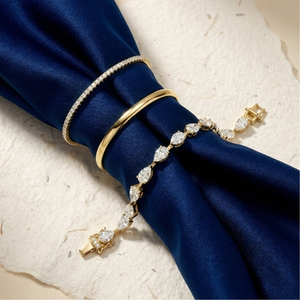 Fine Jewelry
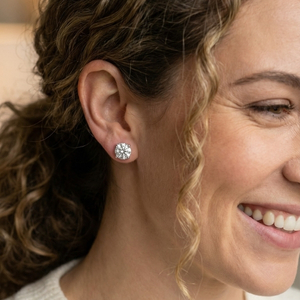 Diamond Studs
 Silver
 Up To 80% Off
 JAN | Garnet
 FEB | Amethyst
 MAR | Aquamarine
 APR | Diamond
 MAY | Emerald
 JUN | Pearl
 JUL | Ruby
 AUG | Peridot
 SEP | Sapphire
 OCT | Opal
 NOV | Citrine
 DEC | Topaz
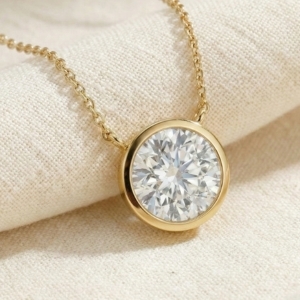 Find The Perfect Gift
 Two Tone
Diamond Cut, Color, Clarity & Carat Explained Simply
Mar 2, 2026
Diamond Cut, Color, Clarity and Carat Explained Simply is all about making you know what really makes the difference in determining the beauty and value of the diamond. The 4Cs are the criteria used across the world to grade diamonds, and they are not all equally important. It is a lot easier to compare stones and make the right choice when you understand how each of them works.
Trusted styles and certified stones: Pompeii3 and its Engagement Rings are worth visiting and enjoying the styles.
Cut: The Most Important Factor for Sparkle
Cut measures how well a diamond reflects light. A well-cut diamond looks brighter, livelier, and often larger than its actual weight. Even a high-carat stone can appear dull if the cut is poor.
Experts agree: always prioritize cut first. A slightly smaller diamond with an excellent cut will usually look better than a larger one with average proportions.
Color: How White Should a Diamond Be?
Diamond color is between D (not at all colored) and Z (yellow or brownish). Most buyers presume that only high grades are attractive, which is not the case.
Diamonds that are nearly colorless but fall within the G-J range tend to seem white when they are in jewelry. These grades will be less expensive and will not require any alteration of the outward appearance. Slight color tones can also be made a little less evident by warmer metals, such as yellow gold.
Clarity: What Actually Matters to the Eye
Clarity is a term used to describe internal marks known as inclusions. The inclusions are usually minute and can only be seen through magnification. The most important thing is to select an eye-clean diamond, a diamond which does not require a microscope to look perfect.
The grades of higher clarity are more expensive, but the apparent distinction of very high and mid-range clarity is usually slight. Certification reports can be used to verify the clarity and positioning of inclusion.
Carat: Understanding Size and Visual Impact
Carat does not count the size of a diamond but the weight. The perceived size is highly affected by cut and shape. As an illustration, a long form may be bigger than a round stone of the same carat.
Since prices are jumping at common weight (1.0 or 2.0 carats), it may be possible to find a better deal by selecting a weight a little lower that can look the same size but be at a better price.
The Expert Priority Order for the 4Cs
A simple professional rule:
Cut first: determines sparkle and beauty
Carat second: choose size within budget
Color third: near-colorless often looks the same
Clarity last: aim for eye-clean, not flawless
This sequence will aid in the balancing of beauty and cost without paying too much to spare on functions that one would not necessarily notice.
Applying the 4Cs When Comparing Diamonds
When looking at diamonds, look at the certification information and not only on photos. If you want to remain within the budget, first concentrate on the cut grade and then fine-tune the color or the clarity. When you feel like you need to have more size to the price, you can look to Lab Grown diamonds, as many buyers nowadays will consider them since they are graded according to the same criteria as natural products.
To see a classic illustration of how a cut stone can be gleaming in an everlasting design, consider designs such as Solitaire Engagement Ring 14k Yellow Gold, which pay attention to the diamond and not the design itself.
Professional Tips for Comparing Diamonds Confidently
- Always demand a well-known grading certificate.
- First, compare diamonds with similar grades of cut.
- And do not pay too much to make your mind clear.
- Carve and chop to achieve maximum impact.
These are the measures that can be taken in order to make sure that the diamond you are opting for looks beautiful even when the sun is shining and not only on paper.
The Simple Truth About the 4Cs
Diamond Cut, Color, Clarity and Carat Explained simply is reduced to one simple concept; to be sparkly is much more important than being perfect on a grading sheet. Find the best cut you can afford, a color which appears white to your eye, eye-clean clarity, and carat versus quality. The combination of these factors will result in a diamond that will shine and feel like a wise decision.