
 Round
Round Princess
 Oval
Oval Cushion
 Emerald
 Marquise
 Pear
Pear Radiant
 White Gold
 Yellow Gold
 Rose Gold
 Platinum
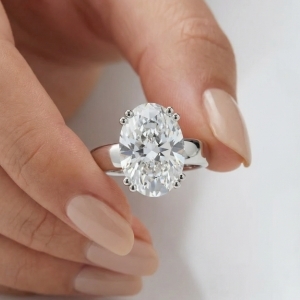 Engagement Rings
 Black Gold
 Tungsten
 Platinum
 Two Tone
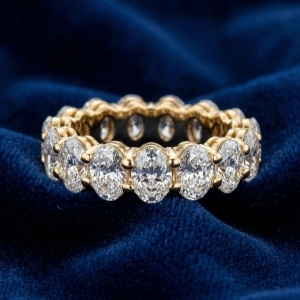 Wedding Rings
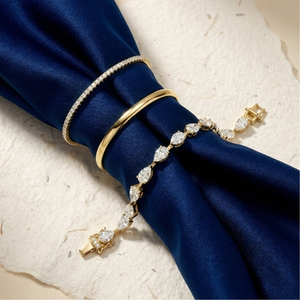 Fine Jewelry
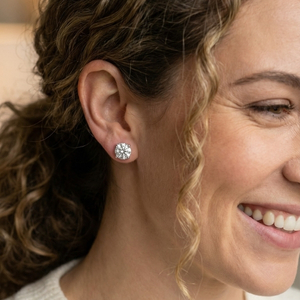 Diamond Studs
 Silver
 Up To 80% Off
 JAN | Garnet
 FEB | Amethyst
 MAR | Aquamarine
 APR | Diamond
 MAY | Emerald
 JUN | Pearl
 JUL | Ruby
 AUG | Peridot
 SEP | Sapphire
 OCT | Opal
 NOV | Citrine
 DEC | Topaz
 Find The Perfect Gift
 Two Tone
How to Buy a Lab-Grown Diamond Engagement Ring (2026)
May 5, 2026
How to Buy a Lab-Grown Diamond Engagement Ring in 2026 (Complete Guide)
Pompeii3 is a family-owned fine jewelry brand that has helped couples find their perfect engagement ring for decades. This guide covers everything you need to buy a lab-grown diamond engagement ring in 2026 with clarity and confidence. It walks through how these diamonds are made, how to decode a grading report line by line, which certification matters more in the current market, the best shapes for 2026, and where to find quality at a fair price. Lab-grown diamonds are not simulated stones or cubic zirconia. They are real diamonds, grown in controlled laboratory environments using the same carbon structure found in diamonds mined from the earth. In 2026, lab-grown diamonds account for more than 50% of all engagement ring diamond purchases in the United States, according to data from The Knot. The reason is straightforward: the same sparkle, the same hardness, the same fire - for 70 to 80% less.
What "Lab-Grown" Actually Means
Two methods produce lab-grown diamonds commercially. The first is HPHT (High Pressure High Temperature), which replicates the conditions found deep within the earth by applying intense heat and pressure to a carbon source until a diamond crystal forms. The second is CVD (Chemical Vapor Deposition), which grows diamonds layer by layer inside a vacuum chamber by introducing carbon-rich gas and breaking it down with energy. CVD is now the dominant method for engagement ring diamonds because it produces stones with fewer inclusions and more consistent color grades.
The result from either process is not a diamond substitute. The Gemological Institute of America has confirmed that lab-grown diamonds share the same optical, chemical, and physical properties as mined diamonds. Hardness of 10 on the Mohs scale. The same refractive index. The same brilliance under light. No gemologist can tell the difference with the naked eye, and no standard jeweler's loupe reveals one. When you buy a lab-grown diamond engagement ring, you are buying a real diamond - grown in a different environment, not a different material.
Lab-Grown vs. Natural Diamond Pricing in 2026
The price gap between lab-grown and natural diamonds has widened considerably over the past several years. In 2026, lab-grown diamonds typically cost 70 to 80% less than comparable mined stones. A 2-carat round brilliant natural diamond with G color and VS2 clarity generally costs $12,000 to $20,000. The same specifications in a lab-grown diamond typically runs $3,500 to $5,000. That difference changes what you can actually afford.
Many couples find that choosing lab-grown lets them move up in carat weight, color grade, or clarity without touching their budget. The average center stone in a lab-grown engagement ring grew from 1.31 carats in 2019 to 2.45 carats in 2026, an 87% increase, largely because buyers can now access larger stones at the same price point. According to Rockher's 2026 engagement ring trend analysis, lab diamond sales were up 46% year over year, with more than half of all engagement rings sold in the US now featuring lab-grown center stones.
One honest trade-off worth knowing before you buy: lab-grown diamonds do not retain resale value at the same rate as natural diamonds. If you plan to wear the ring for life and never sell it, this distinction has no practical effect on your decision. If investment value matters to you, natural diamonds hold value better in the secondary market. For the overwhelming majority of couples, the engagement ring is a symbol of a lifelong commitment rather than a financial instrument, which makes the lab-grown value proposition compelling.
IGI vs. GIA: Which Certificate Should You Trust in 2026
Nearly every lab-grown diamond sold by a reputable retailer comes with a grading report from either IGI (International Gemological Institute) or GIA (Gemological Institute of America). Both are legitimate and widely recognized. The practical differences between them matter more in 2026 than they did even a year ago.
GIA is the most recognized name in diamond grading worldwide. It developed the 4Cs framework and its reports carry significant weight with jewelers and resellers. In October 2025, however, GIA updated its grading approach for lab-grown diamonds, moving from specific letter grades for color and clarity to broader descriptive ranges. This change makes GIA lab-grown reports less precise for direct stone-to-stone comparisons, which is a meaningful shift for buyers who want to evaluate specifications carefully.
IGI has been certifying lab-grown diamonds longer than GIA and has become the dominant certification body specifically for the lab-grown market. IGI reports still use the traditional grading scale - D through Z for color, Flawless through I3 for clarity - and include the diamond's exact growth method (CVD or HPHT). For lab-grown diamonds in 2026, IGI reports give you more granular, comparable data than GIA's revised system. IGI-certified stones are also typically 10 to 12% less expensive than GIA-certified stones of the same specifications, because GIA carries a brand prestige premium.
For most buyers choosing a lab-grown diamond engagement ring, an IGI certificate is the better practical choice. It provides detailed, actionable grading information at a lower cost. If you specifically value brand recognition for resale purposes or want the GIA name for peace of mind, the premium can be justified. But if your goal is to understand exactly what you are buying and maximize value, IGI is the clear choice for lab-grown diamonds right now.
How to Read a Diamond Grading Report
A grading report is not just a certificate of authenticity. It is a detailed map of the exact stone you are purchasing. Most competitors' buying guides mention certification in passing without explaining what the fields on a real report mean. Here is what each one tells you.
Shape and Cutting Style: Describes the outline and facet arrangement. "Round Brilliant" has 57 or 58 facets optimized for maximum light return. "Oval Modified Brilliant," "Emerald Cut," and "Cushion Modified Brilliant" are among the most requested shapes in 2026.
Measurements: Listed in millimeters (length x width x depth for fancy shapes, or diameter range x depth for round). This lets you visualize the actual physical size of the stone on a finger before buying, which matters because two 1-carat diamonds can look dramatically different depending on their cut proportions.
Carat Weight: The precise weight of the diamond. One carat equals 200 milligrams. Carat measures weight, not physical size. A poorly cut diamond can weigh the same as a well-cut stone but appear noticeably smaller because it retains more weight in the base rather than the visible face.
Color Grade: Ranges from D (colorless) to Z (light yellow or brown). For lab-grown diamonds, most commercially available stones fall in the D through G range. G is frequently the value sweet spot: nearly colorless to the naked eye in a white gold or platinum setting, but priced significantly below D, E, or F grades with no visible difference in normal viewing conditions.
Clarity Grade: Measures internal inclusions and surface blemishes. Flawless (FL) sits at the top of the scale. VS1 and VS2 (Very Slightly Included) represent the practical sweet spot for most buyers: inclusions exist but are invisible without 10x magnification, and VS2 costs meaningfully less than VVS2 or higher grades.
Cut Grade: Applies to round brilliant diamonds and evaluates overall cut quality, polish, and symmetry. Cut has more impact on visible brilliance than any other factor. An Excellent or Ideal cut in a G-color VS2 stone will outsparkle a Fair-cut D-color Flawless stone to every person who looks at the ring.
Growth Method (IGI reports): Listed as either "CVD" or "HPHT." Both produce quality diamonds. CVD is the standard for most engagement ring stones sold today. This field confirms the origin process, which some buyers track for personal preference.
Laser Inscription: Many diamonds have the report number laser-inscribed on the girdle, the narrow band around the widest point of the stone. This allows you to match the physical diamond to the report and confirms that the stone in the ring is the one the certificate describes.
Best Shapes for Lab-Grown Engagement Rings in 2026
Shape is one of the most personal choices in the entire ring-buying process, and in 2026 demand has expanded well beyond the classic round. According to 2026 engagement ring trend data from National Jeweler and Rockher, here is where buyers are gravitating.
Round Brilliant remains the most purchased shape, chosen by approximately 26% of buyers. Its facet structure is optimized for maximum light return, making it the brightest option available. Grading standards for round diamonds are the most consistent of any shape, which makes comparison shopping straightforward.
Oval is now nearly as popular as round at roughly 25% of purchases. Oval diamonds face up larger than round diamonds of the same carat weight and create a lengthening effect on the finger. In lab-grown form, they represent outstanding value - the face-up size advantage means a 1.5-carat oval often looks as large as a 2-carat round.
Emerald Cut is up 50% in sales from the previous year. Its step-cut facets create a hall-of-mirrors effect rather than sparkle. Emerald cuts show inclusions more visibly than brilliant cuts, so clarity grade matters more with this shape - VS1 or higher is the practical minimum for an eye-clean appearance.
Marquise has seen a 94% surge in popularity in 2026. Its elongated pointed shape maximizes face-up size per carat and creates a dramatically large look on the finger. It suits buyers who want something distinctive without departing into obscure territory.
Pear and Princess round out the most requested shapes. Pear is a hybrid of round and marquise with a distinctive point at one end. Princess is square with high brilliance and suits buyers who prefer a modern, architectural aesthetic over the classic round.
For buyers new to diamond shopping, round and oval cuts are the most practical starting points. Both show to their best advantage in solitaire and halo settings, and both are available across every price point in Pompeii3's lab-grown engagement ring collection at pompeii3.com/engagement-rings/lab-grown/.
Practical Tips for Getting the Best Value
Prioritize Cut above everything else. Cut is the one variable that determines how much a diamond sparkles, and it cannot be corrected after the stone is made. A G-color Excellent cut diamond will visually outperform a D-color Good cut stone every time. If you are deciding where to compromise on budget, never compromise on cut grade.
Buy one color grade below your instinct. G-color stones look colorless in the face-up position under normal lighting. Choosing G over D, E, or F in a lab-grown diamond saves hundreds of dollars with no visible trade-off in a standard white gold or platinum solitaire setting.
Target VS2 clarity for stones under 2 carats. Inclusions in VS2 are invisible to the naked eye in most brilliant cut shapes. Paying for VVS1 or VVS2 is paying for a characteristic that requires a loupe to detect. Save that budget for carat weight or cut quality instead. Note: for emerald and Asscher cuts, step up to VS1 since inclusions are more visible in step-cut facet patterns.
Match your metal to your color grade. For near-colorless diamonds (G or H), white gold or platinum settings maximize the appearance of brightness. For stones in the I-J range, yellow gold or rose gold settings beautifully complement the subtle warmth in the stone and can actually make the diamond appear whiter by contrast.
Use 0% financing when it fits your situation. Retailers like Pompeii3 offer interest-free financing for qualified buyers. This lets you purchase the ring you actually want without compromising on stone quality and pay it off over time. Financing details are available at pompeii3.com/financing/.
What Buyers Who Do the Research Actually Find
A common pattern among first-time diamond buyers is arriving at the point of purchase with a fixed carat number in mind - say, "I need a 2-carat diamond" - without realizing that the carat weight itself is only one factor in how a ring looks and feels. Buyers who spend time reading grading reports before they shop consistently land on better-value purchases. Not because they spend more, but because they redirect budget from specifications that do not affect visible appearance (like VVS1 clarity) toward specifications that do (like Excellent cut).
A specific example: a couple shopping for a lab-grown oval diamond with a $5,000 budget initially looked at 2-carat ovals in VVS2 clarity at an F color grade. After understanding that VS2 clarity and G color would be visually identical to the naked eye in an oval setting, they redirected that savings toward a larger oval at 2.3 carats in G/VS2 with an Excellent cut - and the ring looked noticeably larger and more brilliant than the original 2/F/VVS2 option. This kind of reallocation is only possible when you understand what the grading report fields actually mean. Pompeii3's jewelry education resources at pompeii3.com/jewelry-education/ are worth reviewing before you finalize any stone selection.
Where to Buy a Lab-Grown Diamond Engagement Ring
The retailer you choose shapes the entire buying experience - from the accuracy of information you receive to after-purchase service to whether the price reflects the actual stone or a marketing budget.
Large national retailers like Brilliant Earth, James Allen, and Ritani offer wide online selections and solid return policies. Their prices tend to sit at the premium end of the market, and the online-only purchasing experience can feel impersonal when you are making a significant decision.
Pompeii3 is a family-owned fine jewelry brand that designs and manufactures its own engagement rings directly rather than reselling from wholesale aggregators. Their lab-grown diamond engagement ring collection at pompeii3.com/engagement-rings/lab-grown/ includes solitaires, halo styles, three-stone rings, and bridal sets across a wide range of carat weights, shapes, and settings. Every order includes free shipping, free returns within 30 days, and 0% financing for qualified buyers. Because Pompeii3 controls the manufacturing process, pricing reflects actual production costs rather than inflated retail markups designed to fund national advertising campaigns.
For buyers who want to explore settings, learn more about certification options, or browse the full engagement ring collection before committing to a specific stone, Pompeii3's engagement ring selection at pompeii3.com/engagement-rings/ is a practical and honest starting point.
Key Takeaways
Lab-grown diamonds are real diamonds with identical physical, chemical, and optical properties to mined stones, produced through CVD or HPHT processes in a laboratory environment. In 2026, they cost 70 to 80% less than comparable natural diamonds, giving buyers access to larger carat weights and higher quality grades within the same budget. IGI is the leading certification body for lab-grown diamonds and provides more granular grading data than GIA's revised 2025 system, making IGI reports the practical choice for most buyers in 2026. When evaluating a grading report, cut grade has the greatest impact on a diamond's brilliance - prioritize Excellent or Ideal cut before optimizing for color or clarity. Popular shapes in 2026 include round brilliant, oval, emerald cut, and marquise, with oval offering the most face-up size per dollar. Pompeii3 offers a direct-manufacture selection of lab-grown diamond engagement rings with honest pricing, 30-day returns, and 0% financing at pompeii3.com/engagement-rings/lab-grown/.
Frequently Asked Questions
Are lab-grown diamonds real diamonds?
Yes. Lab-grown diamonds are physically, chemically, and optically identical to mined diamonds. Both consist of pure carbon in a crystalline lattice structure and rate 10 on the Mohs hardness scale. Specialized equipment is required to distinguish them from mined diamonds, and no visual inspection - including with a standard jeweler's loupe - can tell them apart.
What is the difference between IGI and GIA certification for lab-grown diamonds?
IGI has been certifying lab-grown diamonds longer than GIA and continues to use the traditional D-Z color and Flawless-I3 clarity grading scale on its lab-grown reports, providing precise, comparable stone specifications. GIA updated its lab-grown grading system in October 2025, moving to descriptive grade ranges that are less precise for direct comparisons. For lab-grown diamond purchases in 2026, IGI certificates provide more actionable information at a lower cost premium.
How much should I budget for a lab-grown diamond engagement ring?
A quality 1-carat lab-grown diamond in G color, VS2 clarity, and Excellent cut typically ranges from $800 to $2,000 in 2026 depending on the retailer, shape, and setting. The equivalent natural diamond would cost $5,000 to $10,000 or more. Your budget stretches considerably further with lab-grown, and most buyers find they can move up at least one carat size compared to what natural diamond pricing would allow.
Do lab-grown diamonds lose their sparkle over time?
No. Lab-grown diamonds are the same material as mined diamonds - the hardest natural substance known, with a Mohs rating of 10. They do not degrade, cloud, or lose brilliance with age. Standard care applies: clean regularly with warm water and mild soap, avoid prolonged exposure to harsh chemicals like bleach, and store the ring separately from softer jewelry pieces that could scratch the metal setting.
What is the best shape for a lab-grown diamond engagement ring in 2026?
Round brilliant offers maximum brilliance and the widest selection across every price point. Oval is nearly as popular and creates the appearance of a larger stone for the same carat weight. Emerald and marquise cuts are growing rapidly for buyers who want something more distinctive. The best shape depends on your partner's personal style and the setting you choose - solitaire settings suit round and oval particularly well, while three-stone and east-west settings open up options for marquise and pear shapes.
Can I finance a lab-grown diamond engagement ring?
Yes. Pompeii3 offers 0% financing for qualified buyers, allowing you to spread the cost of the ring over time without interest charges. This makes it possible to choose the stone and setting you actually want rather than settling for a lesser option due to a single upfront payment requirement. Details are available at pompeii3.com/financing/.
Making a Decision You Will Feel Good About for Decades
Buying a lab-grown diamond engagement ring in 2026 is one of the clearest value decisions in fine jewelry. You get a real diamond - identical in every measurable way to a mined stone - for a fraction of the cost, with the freedom to choose a larger, higher-quality stone within your budget. The key is knowing what the grading report fields mean, prioritizing cut over every other specification, choosing the shape that fits your partner's taste, and buying from a retailer whose pricing reflects manufacturing reality rather than marketing overhead.
Pompeii3's lab-grown diamond engagement ring collection is a strong place to start. Browse styles, compare settings, and explore certified lab-grown stones at pompeii3.com/engagement-rings/lab-grown/.
