 Round
Round Princess
 Oval
Oval Cushion
 Emerald
 Marquise
 Pear
Pear Radiant
 White Gold
 Yellow Gold
 Rose Gold
 Platinum
 Engagement Rings
 Black Gold
 Tungsten
 Platinum
 Two Tone
 Wedding Rings
 Fine Jewelry
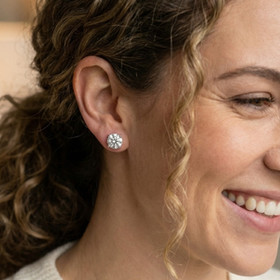 Diamond Studs
 Silver
 Up To 80% Off
 JAN | Garnet
 FEB | Amethyst
 MAR | Aquamarine
 APR | Diamond
 MAY | Emerald
 JUN | Pearl
 JUL | Ruby
 AUG | Peridot
 SEP | Sapphire
 OCT | Opal
 NOV | Citrine
 DEC | Topaz
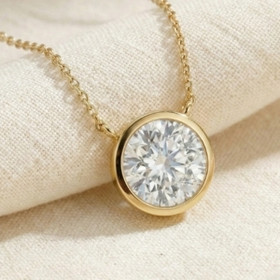 Find The Perfect Gift
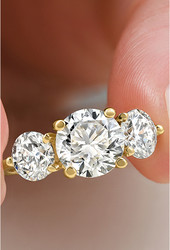
How Are Pompeii3 Rings Made? USA Craftsmanship Explained
May 6, 2026
How Are Pompeii3 Rings Made? A Behind-the-Scenes Look at USA Craftsmanship
Most jewelry brands don't tell you how their rings are made. You see the finished product, the price, and a description of the metal and stone. What happens between raw materials and the ring on your finger rarely gets explained - and when you ask, you usually get marketing language rather than an honest answer.
Pompeii3 is different in a specific, verifiable way: the rings are made in the United States, in-house, by a team with over 55 years of fine jewelry experience. That's not just a tagline. It affects the quality of the finished piece, the oversight applied at each stage, and - directly - what you pay. This guide walks through the ring-making process from start to finish, and explains what "Made in the USA" and "no middleman" actually mean when you're buying fine diamond jewelry.
What Is Pompeii3?
Pompeii3 is a family-owned fine diamond jewelry company founded in 1969 and based in the United States. The company designs and sells engagement rings, wedding rings, and fine jewelry directly to customers - without the retail chain markup that most buyers unknowingly pay. With a Certified Jeweler Gemologist on staff and a design team that handles every stage of development, Pompeii3 brings what it describes as "centuries of traditional principles in craftsmanship to 21st-century consumers." Every ring in the collection is made in the USA.
Step 1: Design and CAD Modeling
Every Pompeii3 ring begins with design. For standard catalog pieces, the design team works from an established concept refined over years of customer feedback and market data. For custom orders - which Pompeii3 offers through its custom ring design and Truly Custom services - the design begins with what the customer wants.
Modern fine jewelry design uses CAD (Computer-Aided Design) software to translate a concept into a precise 3D model. Every prong position, every millimeter of band width, every angle of the setting is specified digitally before a single gram of metal is touched. CAD modeling also allows the designer to visualize proportions, test how a center stone will sit within the setting, and catch potential structural problems before production begins.
This digital-first process is one reason contemporary fine jewelry has become so precise and consistent. A ring designed to hold a 1-carat round brilliant in a four-prong solitaire setting will be produced to exact tolerances - not approximated by hand.
Step 2: Wax Pattern and 3D Printing
Once the CAD model is finalized, it's used to produce a physical pattern - either through traditional wax carving or modern 3D printing. Both methods create the same thing: a precise physical replica of the finished ring, in wax or resin, that will be used to create the mold.
High-end jewelry production today often uses industrial 3D printers calibrated to produce intricate detail - fine pavé settings, milgrain edges, and delicate filigree that would be extremely labor-intensive to carve by hand. The wax or resin model is checked against the design specs before moving to the next stage.
Step 3: Investment Casting (Lost Wax Casting)
The wax pattern is placed inside a metal cylinder and surrounded by a plaster-like material called investment. Once the investment hardens, the cylinder is heated in a kiln. The wax burns away - which is why this is called the "lost wax" process - leaving a hollow cavity inside the solid investment that perfectly matches the shape of the ring.
Molten metal is then forced into that cavity under pressure or by centrifugal force, filling every detail of the mold. The metal used at Pompeii3 includes 14K gold (yellow, white, and rose), 18K gold, and platinum - each requiring precise casting temperatures and handling procedures. A 14K white gold ring, for example, has different flow characteristics than platinum and requires different casting conditions to prevent porosity and surface defects.
Once the metal has cooled, the investment is broken away, and the raw casting emerges: a rough version of the finished ring, complete in shape but requiring significant finishing work.
Step 4: Finishing and Metalwork
The raw casting comes out of the mold with visible seam lines, rough surfaces, and sometimes minor imperfections from the casting process. A skilled bench jeweler removes the casting sprues (excess metal from the injection channels), files down seams, and begins shaping the metal to its final form.
This stage involves a range of hand and machine tools - files, flex-shaft drills, polishing wheels, and burnishers. The goal is a clean, uniform surface with crisp edges where they're supposed to be crisp, and smooth curves where the design calls for them. For rings with complex geometry - like a contoured shank or a halo with intricate millwork - this step requires considerable skill and time.
Pompeii3's production team has been doing this work for decades. The judgment calls that happen at the bench - knowing when a surface is ready for the next step, catching a seam that needs another pass - come from experience that isn't replicable by automation alone.
Step 5: Stone Sourcing and Selection
For diamond rings, the stone is sourced separately from the setting. Pompeii3 selects diamonds based on the four Cs (cut, color, clarity, and carat weight) and works with both natural diamonds and lab-grown diamonds. Lab-grown diamonds are chemically, optically, and physically identical to mined diamonds but are produced in controlled conditions using advanced technology - a category where Pompeii3 has invested significantly.
The Certified Jeweler Gemologist on Pompeii3's team brings trained expertise to stone selection - understanding not just the grading report but how a specific stone will perform in a specific setting. A brilliant-cut diamond selected for a halo setting needs to interact with the halo's micro-pavé stones in a way that produces the intended light performance. Getting that right requires more than matching numbers on a grading certificate.
Pompeii3's selection includes natural diamonds, lab-grown diamonds, black diamonds, blue diamonds, moissanite, and colored gemstones - each sourced to meet the quality standards of the specific ring design they'll be placed in.
Step 6: Stone Setting
Stone setting is often the most technically demanding stage of ring production. The setter must secure the diamond or gemstone in the mounting without damaging the stone, without cracking the prongs or bezel walls, and without introducing any wobble or movement that would compromise durability.
Different settings require different techniques:
Prong setting - the most common approach for solitaires and halo rings - involves pushing individual metal prongs over the girdle of the diamond using a prong pusher and burnisher. The prongs must grip the stone evenly, with consistent pressure, and be polished to remove any rough edges that could catch on fabric.
Pavé and micro-pavé setting - used for the small accent diamonds along the band and in halos - involves drilling tiny seats in the metal and setting each diamond individually, securing it with small beads of metal burnished up around its girdle. A ring with 30 or 40 accent diamonds has 30 or 40 individual setting operations, each requiring precision placement.
Bezel setting - where a continuous wall of metal wraps around the diamond's perimeter - requires the setter to push the metal evenly around the entire girdle, maintaining consistent height and tension throughout.
All of Pompeii3's stone-setting work is done in the USA, by jewelers trained in these techniques. The absence of a long supply chain means each ring can be inspected at this stage before proceeding, and any setting issue can be corrected before the piece reaches a customer.
Step 7: Polishing and Final Finish
After the stones are set, the ring goes through final polishing. This involves multiple stages - from coarser polishing compounds that smooth any remaining surface irregularities down to fine rouge polishing that produces the high-luster finish customers see in product photography and in person.
Different surfaces require different treatments. A high-polish shank catches light differently from a matte or brushed-finish one. Milgrain edges are polished carefully to avoid softening the delicate beaded detail. The prongs are polished to a smooth, snag-free finish without over-polishing to the point that they become thin.
After polishing, the ring is cleaned - typically with an ultrasonic cleaner and steam - to remove all polishing compound residue. The result is the finished product: clean metal, secure stones, and the exact proportions the design called for.
Step 8: Quality Inspection
Before any ring ships, it passes through quality inspection. At Pompeii3, the Certified Jeweler Gemologist is part of this process. Every stone is checked for security - no movement, no wobble, no gap between stone and setting. The metal is inspected for finish consistency, correct dimensions, and structural integrity.
This is a meaningful step that's often skipped or abbreviated in lower-quality supply chains. When a ring is manufactured overseas and shipped to a domestic distributor who then ships to you, inspection opportunities are limited. When a ring is made and inspected in the same facility by the same team, problems are found and corrected before the customer ever sees the piece.
What "Made in the USA" Actually Means
"Made in the USA" is a specific legal designation governed by the FTC: substantially all of a product must be made in the United States. For fine jewelry, this means the design, metalwork, stone setting, and finishing are done domestically rather than outsourced to overseas manufacturing facilities.
The practical implications are significant. USA-made jewelry involves American labor standards and oversight, allows for a more transparent and controllable production process, and supports direct quality accountability at every stage. When something is wrong with a ring made in-house, the jeweler who made it is available to correct it. When something is wrong with a ring that moved through four countries and three distributors before reaching a customer, that accountability chain is much harder to navigate.
It also affects price - but not in the way most buyers assume. Because Pompeii3 operates online and sells directly to consumers with no retail middlemen, the savings from eliminating the retail chain offset the higher labor cost of US production. The company's "Made in the USA • No Middleman • Better Prices" positioning reflects this tradeoff honestly: you get American craftsmanship at prices closer to what you'd pay for an import-heavy retail chain ring.
The Custom Ring Path
For customers who want something beyond the catalog, Pompeii3 offers two custom routes. The Design A Ring service allows customers to select from a range of design components - style, metal, stone shape, stone size - and build a ring that matches their vision within a proven structural framework. The Truly Custom service goes further, allowing for entirely original designs developed in collaboration with Pompeii3's team.
Both paths run through the same production process described above: CAD modeling, wax pattern, casting, finishing, stone setting, inspection. The difference is that the design stage involves direct input from the customer, and the production run is for a single piece rather than catalog inventory.
Lab-Grown Diamonds and the Same Craftsmanship Standard
Pompeii3's lab-grown diamond engagement rings use the same production process as natural diamond rings. The settings are made the same way, the stone setting is done by the same jewelers to the same standards, and the final inspection applies identically.
The only difference is the stone itself. Lab-grown diamonds are produced in laboratory conditions using CVD (Chemical Vapor Deposition) or HPHT (High Pressure High Temperature) processes - both of which produce diamonds with the same crystal structure, hardness, and optical properties as mined stones. The cost advantage of lab-grown diamonds is significant, and Pompeii3 has been working with this technology long enough to have developed reliable sourcing and quality benchmarks for lab-grown stones.
For buyers who want the full fine jewelry experience - handcrafted American-made ring, certified diamond, quality inspection - at a lower total price point, lab-grown diamonds paired with Pompeii3's production process represent a meaningful option.
Key Takeaways
Pompeii3 rings are made in the United States through a process that begins with CAD design, moves through investment casting and bench metalwork, continues through expert stone setting, and concludes with quality inspection by a Certified Jeweler Gemologist. This process applies to both natural and lab-grown diamond pieces, and to both catalog rings and custom-designed pieces. The "Made in the USA, No Middleman" model means the cost savings from cutting out retail distribution offset the higher cost of domestic labor, giving buyers American craftsmanship at competitive prices. Every stage of production happens under direct oversight, which is the practical basis for the quality accountability that a 55-year-old family business stakes its reputation on.
Frequently Asked Questions
Where are Pompeii3 rings made? Pompeii3 rings are made in the United States. The company is a family-owned business founded in 1969, and its rings are designed, cast, set, and inspected domestically. "Made in the USA" is a core part of Pompeii3's brand identity - not a marketing claim attached to rings assembled from overseas components.
What is the lost wax casting process used in jewelry making? Lost wax casting (also called investment casting) is the traditional method used to cast metal into precise ring shapes. A wax or resin model of the ring is encased in plaster-like investment material. The wax is burned away in a kiln, leaving a hollow cavity. Molten metal is then cast into that cavity under pressure, taking the exact shape of the ring. Once cooled, the investment is broken away and the raw casting is finished by hand. This process has been used in jewelry making for centuries and remains the standard method in fine jewelry production today.
Does Pompeii3 use real diamonds? Yes. Pompeii3 offers both natural mined diamonds and lab-grown diamonds. Both are real diamonds - chemically and physically identical, with the same hardness (10 on the Mohs scale), the same optical properties, and the same appearance. The difference is origin: natural diamonds form underground over billions of years; lab-grown diamonds are produced in a controlled laboratory environment. Both are certified and graded using the same standards.
Can I design a custom ring with Pompeii3? Yes. Pompeii3 offers two custom paths: the Design A Ring service allows customers to build a ring from a selection of styles, metals, and stones; the Truly Custom service allows for fully original designs developed with Pompeii3's design team. Both paths use the same production process as catalog rings - CAD modeling, casting, hand finishing, stone setting, and quality inspection - applied to a single-piece custom production run.
Why does "Made in the USA" matter when buying fine jewelry? USA-made jewelry means the design, casting, metalwork, stone setting, and finishing are all done domestically under American labor standards with direct quality oversight. It means that if something is wrong with the ring, the team that made it is accountable and available to correct it - no overseas supply chain to navigate. It also means consistent quality control, since each stage of production happens in the same facility rather than being distributed across multiple countries. At Pompeii3, the no-middleman direct-to-consumer model helps keep prices competitive despite the higher cost of domestic production.
How long does it take to make a Pompeii3 ring? Standard catalog rings are built-to-order. Production timelines vary by design complexity and current order volume. Custom rings through the Design A Ring or Truly Custom services involve additional time for the design review and approval stage before production begins. For specific timelines on a current order or a custom project, Pompeii3's team is available by phone 24/7 at (847) 367-7022 or via live chat.
Pompeii3 designs and makes every ring in the USA, selling directly to customers with no retail markup. Browse our full collection of engagement rings and wedding rings, explore custom ring design options, or call us 24/7 at (847) 367-7022 to talk through what you're looking for.