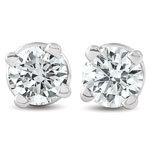
Examining the Jewelry
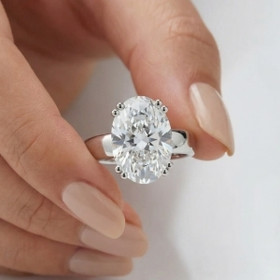
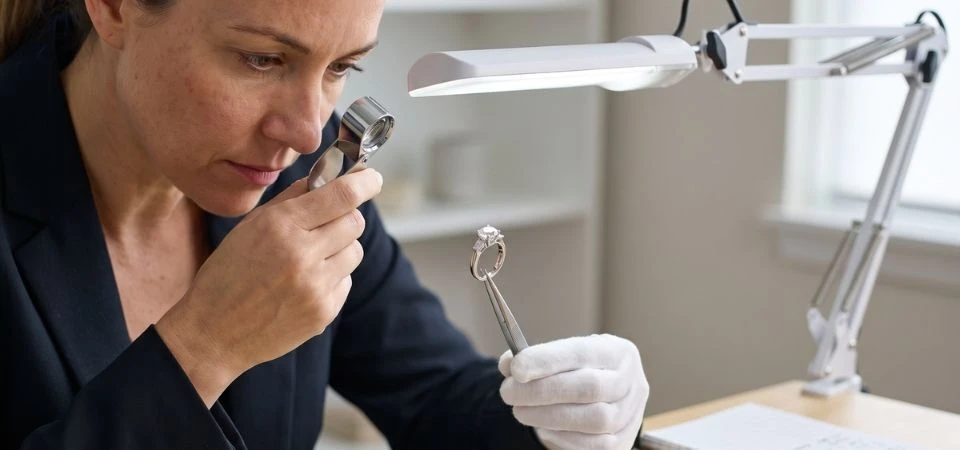
The evaluator reviews the jewelry's overall design, condition, settings, hallmarks, and visible characteristics. The examination helps establish what can be documented and whether further testing is needed.
Free Shipping & Easy Returns
Your guide to jewelry documentation
Discover the professional techniques, instruments, and careful observations used to describe and evaluate fine jewelry—and understand the information recorded on your certificate.
Explore the ProcessUnderstanding your jewelry
Jewelry evaluation brings together visual inspection, gemstone assessment, precise measurements, metal identification, and written documentation. The exact procedures and tests depend on the piece and the scope of the appraisal.
The evaluator reviews the jewelry's overall design, condition, settings, hallmarks, and visible characteristics. The examination helps establish what can be documented and whether further testing is needed.
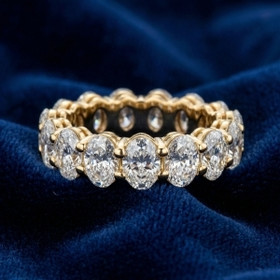
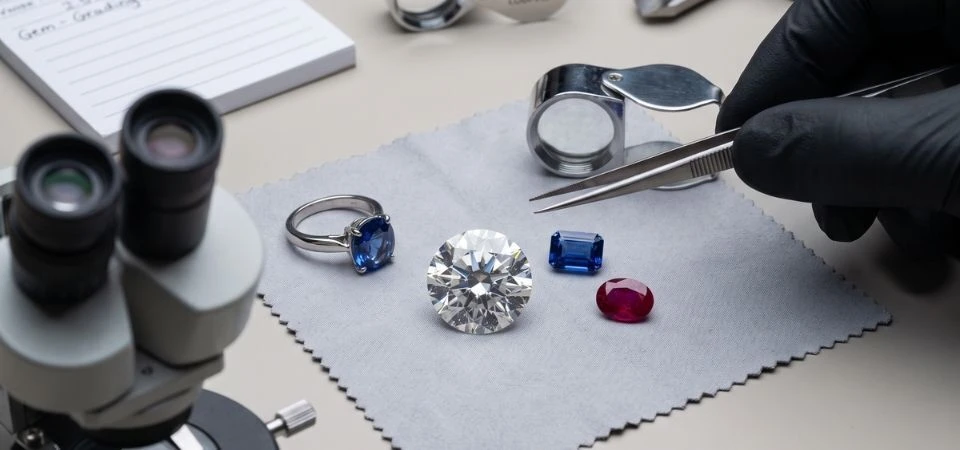
Diamonds and gemstones may be inspected under magnification for visible characteristics, proportions, and setting details. Mounted stones can limit the accuracy of some assessments.
Relevant measurements can include dimensions, metal markings, total jewelry weight, and estimated gemstone weight. Metal purity may require additional testing beyond reading a hallmark.
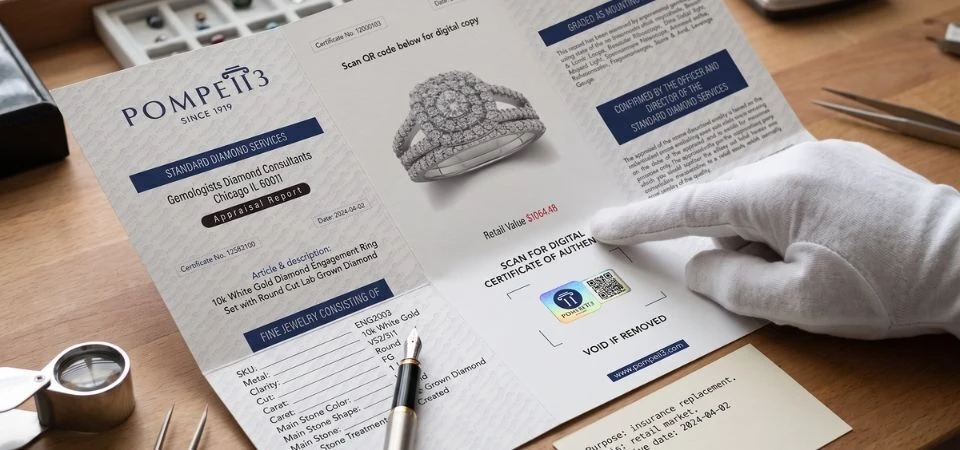
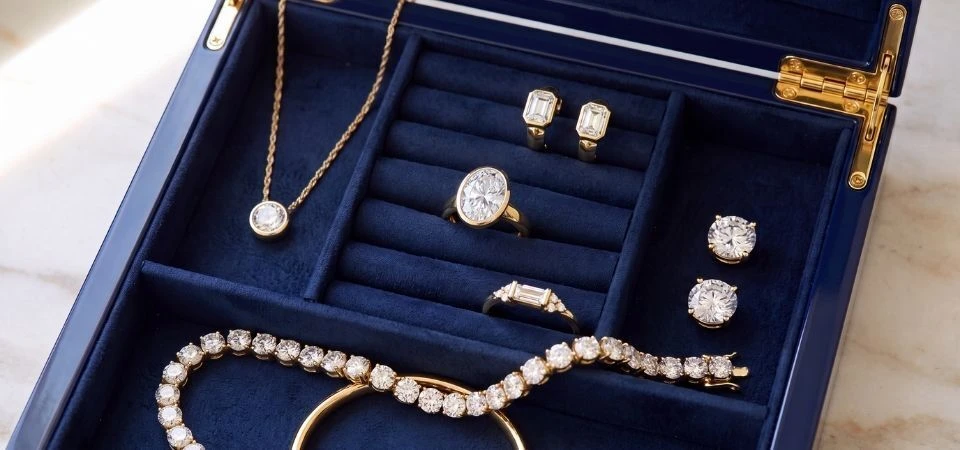
Recorded characteristics are assembled into a written description. When an appraisal value is supplied, it should reflect a stated valuation purpose, basis, and effective date.
Instruments & techniques
The following are examples of commonly used professional instruments. They do not imply that every instrument or test was used on your specific piece.
A handheld magnifier for viewing stone features, settings, and metal markings.
Provides magnified views of inclusions, surface details, and craftsmanship.
Measures jewelry weight; mounted stone weights may need to be estimated.
Measure stone and jewelry dimensions in millimeters.
Help screen certain stone properties; further tests may be required to establish identity or origin.
Depending on the method, helps assess metal composition or purity when verification is necessary.
Diamond education
Four widely used factors help describe diamond quality. Their evaluation may be limited when a diamond remains mounted.
How a diamond's proportions and finishing influence its appearance and light performance.
The degree of body color assessed using established grading scales.
Internal inclusions and external blemishes assessed under standard conditions.
A measure of gemstone weight—not its visible size.
Your questions answered
Not necessarily. Independent grading applies only if a separate report from an identified gemological laboratory is provided or expressly referenced.
When a gemstone is set in jewelry, its exact loose weight generally cannot be measured without removal. Evaluators may estimate it using dimensions and other information.
No. Retail replacement, fair market, and resale values can differ significantly. The appraisal should state the value type and effective date.
Contact Pompeii3 with your order number and the information printed on your certificate so the team can review your documentation.
We're here to help
Our customer support team can help explain the documentation provided with your purchase.
Contact Customer SupportEducational information only. Specific tests, grading, and valuation methods vary by item and document.