 Round
Round Princess
 Oval
Oval Cushion
 Emerald
 Marquise
 Pear
Pear Radiant
 White Gold
 Yellow Gold
 Rose Gold
 Platinum
 Engagement Rings
 Black Gold
 Tungsten
 Platinum
 Two Tone
 Wedding Rings
 Fine Jewelry
 Diamond Studs
 Silver
 Up To 80% Off
 JAN | Garnet
 FEB | Amethyst
 MAR | Aquamarine
 APR | Diamond
 MAY | Emerald
 JUN | Pearl
 JUL | Ruby
 AUG | Peridot
 SEP | Sapphire
 OCT | Opal
 NOV | Citrine
 DEC | Topaz
 Find The Perfect Gift
1-Carat Lab-Grown Diamond Ring: Guide, Prices, and Top Picks
Posted by Pompeii3 Inc on Sep 29, 2026
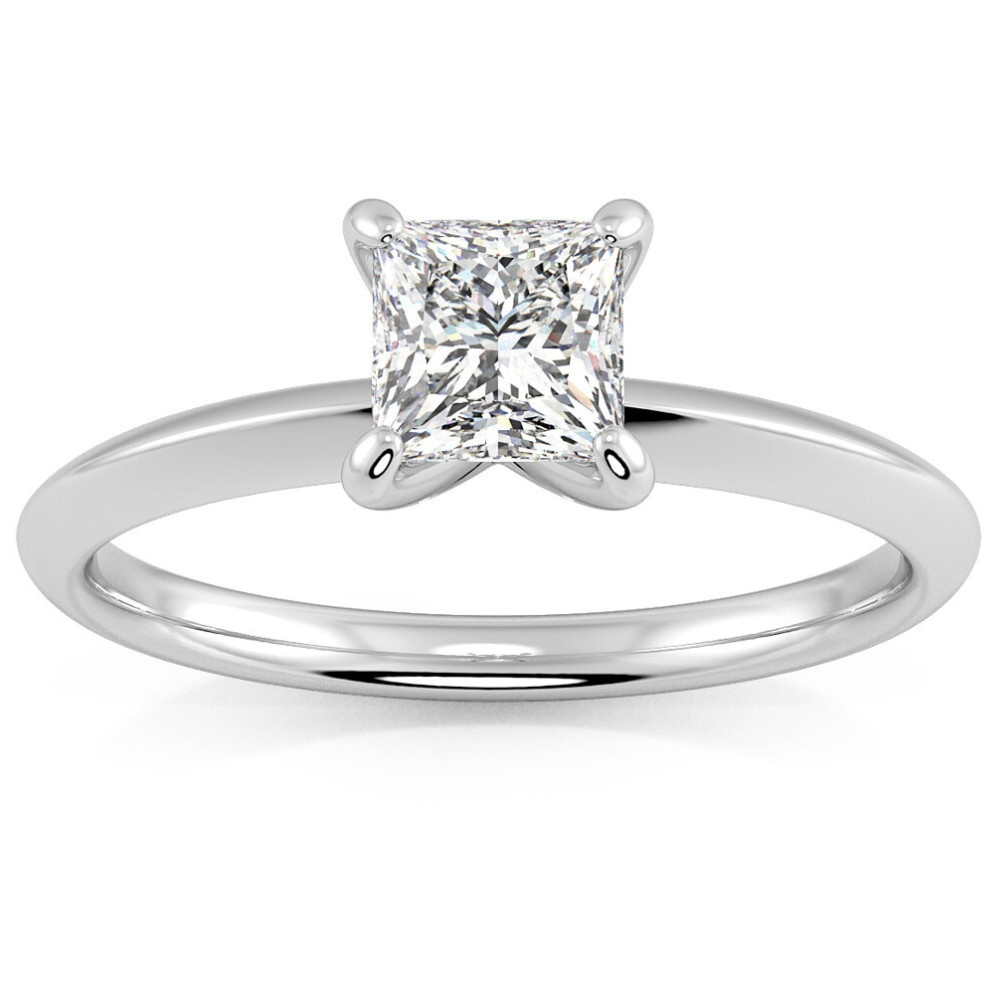
If you're already set on a 1-carat lab-grown diamond, you're doing research at the right time. The buyers who end up happiest with this purchase are the ones who looked into what 1 carat actually looks like on a hand, what's driving the price differences, and how shape affects the visual result on the finger, not just what the certificate says.
Here's what's worth knowing before you buy.
What 1 Carat Actually Means
Short answer: Carat is a unit of weight, not size. One carat equals 0.2 grams. Two stones can both be 1 carat and look meaningfully different in diameter depending on how they are cut and what shape they are.
Carat is one of the most misunderstood metrics in diamond buying because most people expect it to describe size when it actually describes weight. A well-cut round brilliant 1-carat diamond measures approximately 6.4 to 6.5mm in diameter across the face. A 1-carat oval can measure 8mm long by 5.5mm wide, which creates an elongated look that visually reads larger.
This gap between carat weight and perceived size is one of the main reasons shape selection matters so much in the 1-carat range.
What a 1-Carat Lab-Grown Diamond Ring Actually Costs in 2026
Short answer: A well-certified 1-carat lab-grown diamond engagement ring from a reliable retailer typically falls between $700 and $2,500 depending on shape, cut quality, and setting complexity. Rounds cost more than fancy shapes. Halos and pavé settings add to the total.
Lab-grown diamond prices have continued to fall as production has scaled. In 2026, the premium for a round brilliant with excellent cut, F-G color, and VS1-VS2 clarity from a reputable source sits far below what a comparable mined stone would cost — often 70% to 80% less.
| Shape | Approx. Range (Ring + Stone) |
|---|---|
| Round Brilliant | $1,000 – $2,500+ |
| Oval | $800 – $2,000 |
| Cushion | $750 – $1,800 |
| Princess | $700 – $1,600 |
| Emerald | $750 – $1,700 |
| Pear | $700 – $1,700 |
These ranges include the stone and a standard setting. Custom designs, halo settings, and premium metals push toward the higher end. Plain solitaires in yellow or white gold with good-quality stones sit comfortably in the lower range.
How Big Does a 1-Carat Diamond Look on a Hand?
Short answer: On an average ring size (US 6 to 7), a 1-carat round brilliant looks noticeable but not oversized. Elongated shapes like oval and pear read larger at the same carat weight. Finger width matters more than most buyers expect.
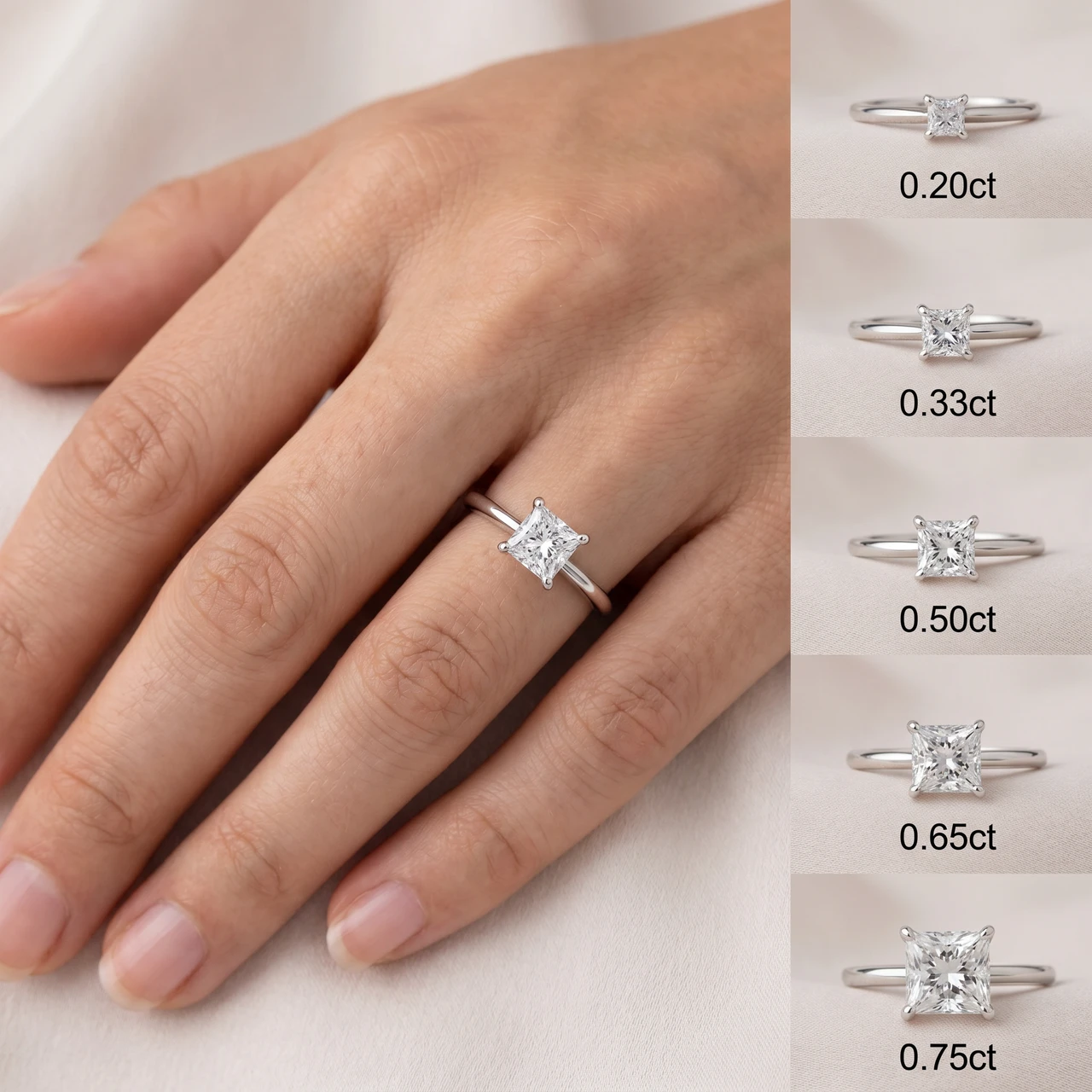
A 6.4mm round brilliant sits noticeably above the finger without dominating it. On a narrower finger, a 1-carat stone can appear larger. On a wider finger, the same stone may read closer to a 0.75 carat appearance.
The elongation effect of oval, pear, and marquise shapes is real. A 1-carat oval at 8mm x 5.5mm covers more surface area on the finger than a 1-carat round at 6.4mm diameter. Many buyers who want a prominent look choose oval or pear precisely for this reason while staying in the 1-carat price range.
Which Shape Should You Choose at 1 Carat?
Short answer: Round brilliant maximizes sparkle and versatility. Oval and pear create a larger visual footprint. Cushion is softer and romantic. Emerald and Asscher suit buyers who prefer clean lines over flash.
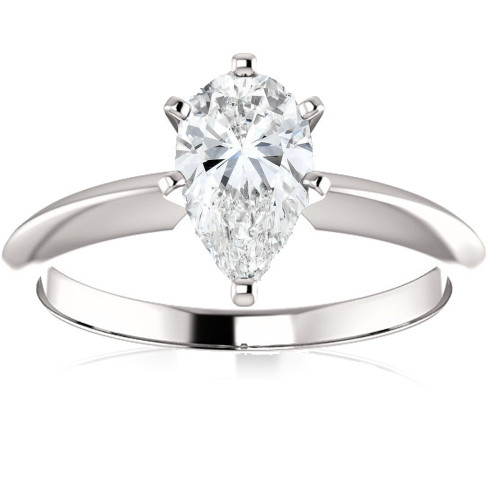
Shape is one of the most personal decisions in ring buying because it affects everything: daily appearance, how large the stone looks, which settings are available, and how light moves through the stone. Here's how the main shapes perform at 1 carat:
- Round Brilliant: The standard. Maximum light return, works in every setting, and holds resale value better than any other shape in the lab-grown category. Costs slightly more than fancy shapes at equivalent quality grades.
- Oval: Elongates the finger, reads larger than round at the same weight, softer and romantic. Very popular right now. Watch for bow-tie effect in lower-quality cuts.
- Cushion: Square with rounded corners, soft vintage feel. Sparkle varies significantly by cut style. Chunky cushions have larger facets and a glowy look; crushed-ice cushions have smaller facets and a more crushed sparkle pattern.
- Princess: Square and modern. Strong brilliance, corner prongs required. Slightly less finger coverage than round.
- Emerald: Rectangular step cut with wide open table. Very transparent. Color and clarity matter more here than in brilliant cuts because there's nowhere for inclusions or tint to hide.
- Pear: Teardrop shape. Elongating like oval, with a pointed tip. Requires a V-prong or bezel at the tip to protect it.
- Marquise: Football-shaped. Maximum elongation per carat of any shape. Striking but polarizing.
Setting Styles for a 1-Carat Lab-Grown Diamond Ring
Short answer: Solitaire maximizes the stone's presence. Halo adds visual size. Pavé adds sparkle to the band. Bezel protects the stone. Three-stone adds meaning.
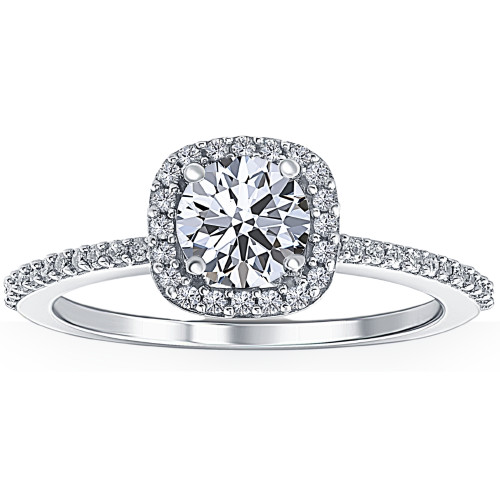
At 1 carat, the stone carries itself, so setting choice is less about adding visual weight and more about personal style and practical lifestyle fit.
Solitaire: Classic, clean, and lets the diamond be the story. A four-prong or six-prong solitaire is the most enduring choice in this category. Low profile solitaires suit active lifestyles and people who prefer minimal snag risk.
Halo: A ring of smaller accent diamonds surrounds the center stone, making the entire cluster appear larger. A 1-carat stone in a halo reads more like 1.3 to 1.5 carats visually. It adds cost and requires more maintenance but creates a statement look.
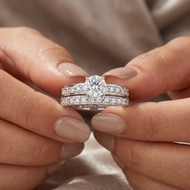
Pavé band solitaire: The center stone sits in a clean setting while the band is covered in small diamonds. Adds sparkle from every angle without changing the profile of the center stone.
Three-stone: Two smaller accent stones flank the center. Traditionally symbolizes past, present, and future. Adds overall carat weight to the ring without changing the center stone size.
Bezel: A metal rim fully or partially encircles the stone. Offers maximum protection, a modern look, and low snag risk. The stone appears slightly smaller than in a prong setting because the rim covers the outer edge.
Where to Buy a 1-Carat Lab-Grown Diamond Ring from Pompeii3
Short answer: Pompeii3 sells certified 1-carat lab-grown diamond engagement rings through its EX3 Created Diamonds line at pompeii3.com, with a full range of shapes, settings, and metals. EX3 stones are graded by independent labs and carry documentation comparable to mined diamond certification.

The EX3 Created Diamonds line is Pompeii3's dedicated lab-grown collection. It spans shapes from round brilliant and oval to cushion and princess, in settings from plain solitaires to halo and pavé designs. Rings are available in 14k white gold, yellow gold, and rose gold, with platinum available on select styles.
Pompeii3 has been selling diamond jewelry online since 1999. The combination of long operational history, EX3 certification documentation, and direct pricing makes it a practical source for buyers doing serious comparison shopping in the $700 to $2,000 range for 1-carat lab-grown stones.
Frequently Asked Questions
Is a 1-carat lab-grown diamond a good size?
Yes, for most buyers. A 1-carat round brilliant measures about 6.4mm in diameter, which is noticeable and proportional on an average finger size. It's large enough to be clearly visible without being uncomfortably large for everyday wear. Many buyers in the $1,000 to $2,000 budget range find 1 carat offers the best combination of visual presence and price.
How much should I pay for a 1-carat lab-grown diamond ring?
In 2026, a well-certified 1-carat lab-grown diamond ring from a reputable retailer costs between $700 and $2,500 depending on shape, cut quality, and setting. Round brilliants with excellent cut and F-G color in VS clarity typically fall in the $1,200 to $2,000 range when set in a solitaire. Fancy shapes (oval, cushion, pear) tend to cost less at equivalent quality grades.
Are lab-grown diamonds real diamonds?
Yes. Lab-grown diamonds are chemically, physically, and optically identical to mined diamonds. Both are pure crystallized carbon with the same hardness (10 on the Mohs scale), same refractive index, and same fire and brilliance. The only difference is origin. Independent grading labs such as IGI and GIA issue certificates for lab-grown stones using the same 4C criteria as mined diamonds.
What is the best shape for a 1-carat lab-grown diamond?
Round brilliant is the most popular because it offers maximum light return and suits every setting style. Oval is the top choice for buyers who want the stone to read larger than 1 carat because of its elongated outline. Cushion and princess are popular for buyers who prefer a softer or more geometric look. Emerald suits buyers who prefer understated elegance over flash.
Does Pompeii3 certify its lab-grown diamonds?
Yes. EX3 Created Diamonds from Pompeii3 come with independent lab certification documenting cut, color, clarity, and carat weight. Documentation is included with purchase and confirms the stone's grades as assigned by the grading lab.
Ready to Find Your 1-Carat Ring?
Browse EX3 Created Diamonds at Pompeii3 — certified lab-grown stones in every major shape, starting under $1,000.
SHOP 1-CARAT LAB-GROWN RINGS