 Round
Round Princess
 Oval
Oval Cushion
 Emerald
 Marquise
 Pear
Pear Radiant
 White Gold
 Yellow Gold
 Rose Gold
 Platinum
 Engagement Rings
 Black Gold
 Tungsten
 Platinum
 Two Tone
 Wedding Rings
 Fine Jewelry
 Diamond Studs
 Silver
 Up To 80% Off
 JAN | Garnet
 FEB | Amethyst
 MAR | Aquamarine
 APR | Diamond
 MAY | Emerald
 JUN | Pearl
 JUL | Ruby
 AUG | Peridot
 SEP | Sapphire
 OCT | Opal
 NOV | Citrine
 DEC | Topaz
 Find The Perfect Gift
Bezel vs Prong Setting: Which Is Right for Your Ring?
Posted by Pompeii3 Inc on Sep 29, 2026

The setting is not just a design detail. It determines how protected the stone is, how much light reaches it, how often you'll need maintenance, and how well it holds up to your actual daily life. Most buyers focus on the stone first and the setting second. That's usually when the most important structural decision gets made by accident.
This guide covers both settings directly: what they are, where each one wins, and who each one is right for.
What Each Setting Actually Is
Short answer: A prong setting holds the stone with metal claws. A bezel setting wraps the entire perimeter of the stone in a metal rim. Everything else follows from that one difference: security, brilliance, and maintenance.
Prong Setting
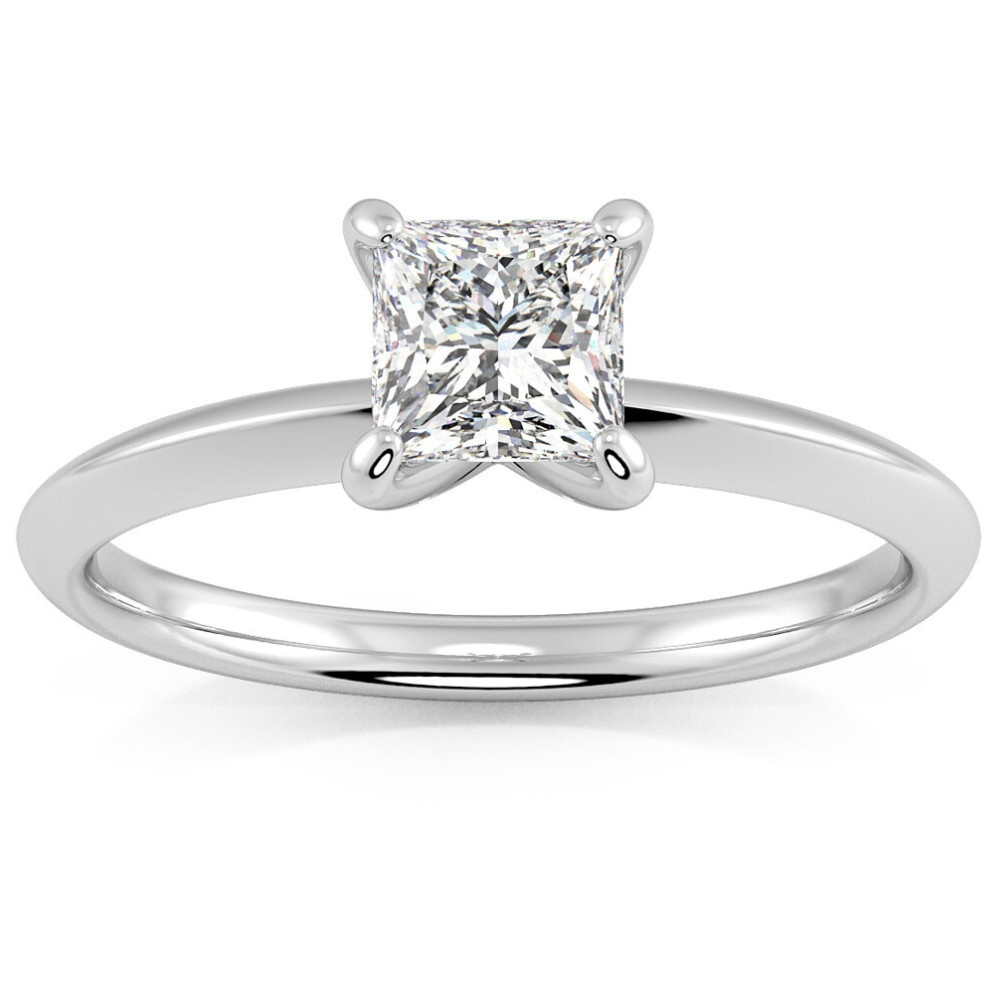
A prong setting holds the stone in place using metal claws, usually four or six, that grip the girdle of the stone and curve over its top edge just enough to hold it securely. The rest of the stone sits exposed to air and light from almost every angle.
Four-prong settings are the most common for round brilliant diamonds. Six-prong settings, including the classic Tiffany-style setting, add one additional contact point per stone, which gives marginally more security and a slightly different look. Prong settings can be used on round, oval, cushion, pear, princess, emerald, and most other shapes, though pointed shapes like marquise and pear typically use V-prongs at the tip to protect the most vulnerable part of the stone.
Bezel Setting

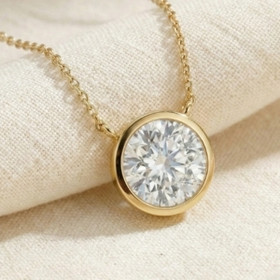
A bezel setting wraps the entire perimeter of the stone in a continuous rim of metal. The metal is folded down over the stone's girdle to hold it completely enclosed around the circumference. The top face of the stone and the table remain visible, but the sides are fully protected.
A full bezel encloses the stone on all sides. A half-bezel, sometimes called a partial bezel or east-west bezel, covers only opposite ends of the stone, leaving the sides open. Half-bezels give more light access than a full bezel while still protecting the most structurally critical areas of the stone. They are particularly common with oval diamonds, where the open sides show the stone's length and elongation more clearly.
Security Comparison
Short answer: Bezel wins on security. The stone is fully enclosed with no exposed prong tips to snag or bend. If you work with your hands or live an active life, this difference shows up in real, everyday ways.
Why Bezel Is Safer for the Stone
A bezel setting holds the stone from all sides simultaneously. There are no prong tips that can catch on fabric, equipment, gloves, or hair. There is no single contact point whose failure causes the stone to loosen. The metal rim distributes force around the entire girdle.
This matters for buyers who work with their hands in environments where a ring will make contact with surfaces regularly: healthcare workers, construction, food service, personal training, outdoor sports, manual trades. In these contexts, prong tips bend and snag with enough wear to eventually release the stone. A bezel setting doesn't work that way.
Where Prong Settings Are Vulnerable
Prong tips are the most exposed part of any prong-set ring. They can catch on fine fabrics and knitwear, snag on gloves, and bend outward against hard surfaces. A bent prong does not immediately release the stone, but a prong that gets bent back and forth repeatedly will eventually fail. Professional prong inspections every one to two years are standard maintenance for prong-set rings precisely because this wear is expected.
A stone in a prong setting is not insecure when properly maintained. But maintenance is required. That's the real trade-off.
Sparkle and Brilliance Comparison
Short answer: Prong settings allow more light to reach the stone from more angles, which increases brilliance and scintillation, the movement of light as the ring moves. Bezel settings reduce light entry from the sides, producing slightly less sparkle but a cleaner, more geometric look.
Why Prong Settings Maximize Brilliance

A prong-set stone is exposed on all sides below the girdle. Light enters the stone from the sides, travels through the pavilion facets, and returns through the table as brilliance. The more light that enters the stone, the more light returns to the eye. Four-prong and six-prong settings maximize this exposure. For buyers who prioritize how a diamond looks in motion, the flash of light as it catches different angles, a prong setting is the stronger choice.
Round brilliant diamonds in particular are cut to maximize light return, and a prong setting lets that cut perform at its best. Oval, cushion, and pear-cut diamonds in prong settings also show their full spread and length without interruption.
What Bezel Does to a Stone's Appearance
A bezel setting covers the girdle and part of the stone's crown facets. Light cannot enter from the sides. This reduces the scintillation pattern visible from certain angles compared to a prong setting on the same stone. The brilliance the stone does produce comes through the table and upper facets.
The trade-off is intentional for many buyers. A bezel setting gives a clean, flat metal edge around the stone that reads as modern and minimalist rather than traditional. The stone sits flush with the metal. When cut quality is high, a bezel-set diamond still shows strong brilliance. The difference between a well-cut bezel-set diamond and the same stone in a prong setting is visible but not dramatic under most lighting. Where it shows most is in direct light where the angular fire of a prong-set stone catches the eye from a distance.
Maintenance Requirements
Short answer: Bezel settings require less routine maintenance than prong settings. Prongs should be professionally inspected every one to two years. Bezel settings are structurally stable and require standard cleaning, but stone retention does not require periodic re-tipping.
Prong Maintenance Schedule
Prong tips wear down over years of daily wear. They can also bend from impact. The standard recommendation is a professional prong inspection every one to two years to check for any prong that has thinned, bent, or shifted enough to reduce stone retention. A jeweler will re-tip any prongs that have worn past a safe point. This service is inexpensive and widely available, but it means scheduling an appointment and leaving the ring for a day. Over the life of the ring, it's a recurring cost worth planning for.
Bezel Maintenance
A bezel-set ring needs the same basic care as any ring: periodic cleaning with warm water and a soft brush to remove product buildup under the stone. The metal rim doesn't wear in a way that loosens the stone under normal daily use. Professional cleaning every year or two is good practice, but there is no structural maintenance to schedule the way prong inspections are.
Who Bezel Is Right For

- Active and physical lifestyles: nurses, teachers, athletes, tradespeople, anyone who works with their hands or wears gloves
- Buyers who want minimal maintenance and no recurring jeweler visits for structural checks
- Minimalist and modern style preferences: the clean metal edge reads as contemporary, architectural, and sleek rather than classic
- Someone who finds traditional prong settings too decorative or fussy
- Buyers who are particularly protective of their stone and value security above maximum sparkle
- Oval, elongated cushion, and east-west oriented stones, which often look especially intentional in a bezel or half-bezel frame
Who Prong Is Right For
- Buyers who prioritize maximizing diamond brilliance, fire, and visual size
- Those who prefer the traditional and classic engagement ring look that has dominated the category for more than a century
- Buyers comfortable with periodic professional maintenance
- Styles where the setting's decorative quality matters: vintage halo designs, cathedral shoulders, and ornate pave bands all pair naturally with prong centers
- Round brilliant diamonds, where the cut's light-return is optimized by unobstructed light entry from the sides
Solitaire Engagement Rings | Halo Engagement Rings | Six-Prong Styles
Half-Bezel: The Middle-Ground Option

A half-bezel, or partial bezel, covers the east and west ends of the stone but leaves the north-south sides open. This gives more light access than a full bezel while still protecting the most structurally critical areas, particularly the tips of oval, pear, and marquise shapes, which are the most vulnerable to chipping.
For buyers who want more security than a prong provides but find the full bezel too enclosed, a half-bezel is the practical answer. Oval diamonds in half-bezel settings are among the most popular options for buyers with this preference. The setting frames the stone's elongation while securing the pointed tips where chips most commonly occur.
Half-bezel settings also tend to look contemporary and intentional. They read as a design choice rather than a default, which suits buyers who want a ring that looks considered without being ornate.
Half-Bezel Engagement Rings | Oval Engagement Rings
Side-by-Side Comparison
| Factor | Bezel Setting | Prong Setting |
|---|---|---|
| Stone protection | High, fully enclosed on all sides | Moderate, stone secured at contact points only |
| Brilliance / light return | Slightly reduced from sides | Maximum, open from all angles |
| Snag risk | Very low, no exposed tips | Moderate, prong tips can catch on fabric |
| Maintenance | Standard cleaning, no structural checks needed | Prong inspection every 1 to 2 years |
| Style | Modern, minimalist, architectural | Classic, traditional, maximum stone exposure |
| Best stone shapes | Round, oval, emerald, cushion | Round brilliant, all shapes |
| Best lifestyle | Active, physical, low-maintenance preference | Lower-contact daily life, willing to maintain |
| Half-bezel option | Yes, east-west coverage only | N/A |
Frequently Asked Questions
Is a bezel setting more secure than a prong setting?
Yes. A bezel setting encloses the stone completely around its circumference, leaving no exposed prong tips that can bend or snag. If you're active or work with your hands, a bezel setting is noticeably safer over time. A prong setting is not insecure when properly maintained, but it requires periodic professional inspections that a bezel setting does not.
Does a bezel setting make a diamond look smaller?
A bezel setting can make a stone appear slightly smaller than the same stone in a prong setting, because the metal rim covers part of the girdle that would otherwise be visible. This effect is most noticeable from the side. From above, the table and crown facets are fully visible. The trade-off depends on what you value: if visual size from all angles matters, a prong setting shows more stone. If a clean, low-profile look is the goal, the bezel achieves it without meaningfully affecting the diamond's face-up appearance.
How often do prong settings need to be checked?
Once every one to two years is the standard recommendation. A jeweler inspects the prong tips for wear, bending, or thinning and re-tips any that have moved past a safe point. The process is quick and inexpensive at most jewelers. Some rings need more frequent checks if worn in high-contact environments. The sign to watch for in everyday wear is any prong catching on fabric. When that happens, book an appointment.
Can I switch from a prong to a bezel setting?
Yes. A ring can be reset in a bezel style, though it requires a new setting to be fabricated around the existing stone. This is a jeweler or custom workshop service and is not a minor alteration; the original setting is removed and replaced. Pompeii3 offers custom and redesign services. Contact the team for a consultation. If you are choosing a setting for a new purchase, selecting the setting that suits your lifestyle from the start avoids the need and cost of resetting later.
What is the best setting for an oval diamond?
Oval diamonds are versatile, but a half-bezel or four-prong setting are both strong choices. A half-bezel protects the pointed tips of the oval where chips most commonly occur while leaving the long sides of the stone visible. A four-prong setting with V-prongs at the tips offers the same tip protection while maximizing light exposure. The choice comes down to lifestyle: active buyers should lean toward the half-bezel. Buyers prioritizing brilliance and visual presence should choose prong.
Ready to Find Your Setting?
Browse Pompeii3's full collection of bezel, half-bezel, and prong engagement rings, in both lab-grown and natural diamond options.
Shop Bezel Settings Browse Solitaire Rings