 Round
 Princess
 Oval
 Cushion
 Emerald
 Marquise
 Pear
 Radiant
 White Gold
 Yellow Gold
 Rose Gold
 Platinum
 Engagement Rings
 Black Gold
 Tungsten
 Platinum
 Two Tone
 Wedding Rings
 Fine Jewelry
 Diamond Studs
 Silver
 Up To 80% Off
 JAN | Garnet
 FEB | Amethyst
 MAR | Aquamarine
 APR | Diamond
 MAY | Emerald
 JUN | Pearl
 JUL | Ruby
 AUG | Peridot
 SEP | Sapphire
 OCT | Opal
 NOV | Citrine
 DEC | Topaz
 Shop Holiday Gifts
Birthstone Circle Pendant Necklace
Mar 18, 2026
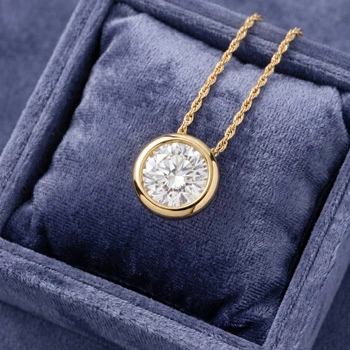
Birthstone circle pendant necklaces occupy a specific and lasting place in personalized jewelry. The design is straightforward: a circular frame in gold or sterling silver, centered with a gemstone tied to the wearer's birth month. That combination of symbolic shape and personal stone creates a piece that carries real meaning rather than generic sentiment.
For buyers who want to give something that feels considered, a circle pendant necklace with a birthstone is one of the more reliable choices in fine jewelry. It is personal enough to feel thoughtful without being so niche that the recipient's taste becomes a risk factor.
What Makes a Birthstone Circle Pendant Necklace Special?
The circle has been used in jewelry design across cultures for centuries. It carries associations with eternity, wholeness, and continuity. A birthstone circle pendant inherits those associations while adding a layer of individual identity through the gemstone.
Unlike initials or engravings, a birthstone communicates personal meaning through color and material rather than text. That visual quality makes it wearable across more contexts and less dependent on the specific piece having legible details. Someone viewing the necklace from across a room sees a clean, polished circle with a stone at its center. The personal significance is there for the wearer without becoming an obvious identifier to observers.
Lab-grown birthstone options have expanded the selection significantly. Stones like ruby, sapphire, and emerald, once expensive enough to price many buyers out of fine jewelry, now come in lab-grown versions that match natural stones in appearance at a fraction of the cost. This makes it possible to deliver a genuine fine jewelry piece without the premium that previously limited options for many birth months.
Why Birthstone Circle Pendants Remain Popular
Personalized jewelry trends cycle, but birthstone circle pendants have remained a consistent seller for several reasons. First, the recipient pool is universal. Almost every person has a birth month, which means the piece can work for anyone from a teenager receiving a birthday gift to a grandmother being acknowledged on a milestone occasion.
Second, the circle silhouette is adaptable. It works with other necklaces in layered looks, sits cleanly on its own, and reads as polished rather than costume in most professional and social settings. That adaptability increases the chance a recipient actually wears the piece regularly rather than saving it for rare occasions.
Third, the category has improved significantly in materials and construction quality. Buyers expecting something that will hold up to daily wear can find options in 14K gold with quality gemstones that genuinely perform as fine jewelry over time.
Birthstone Circle Necklace Highlights
- Personalization without specificity: The birthstone communicates individual meaning without requiring the piece to display personal information openly.
- Wide occasion fit: Works as a birthday gift, anniversary gift, Mother's Day gift, or milestone marker across virtually any age group.
- Layering compatibility: The clean circular silhouette works well with other chain styles and pendants without competing for visual attention.
- Lab-grown options: Stones like ruby, emerald, and sapphire are available in lab-grown versions that deliver the same appearance at more accessible price points.
- Metal flexibility: Available in yellow gold, white gold, rose gold, and sterling silver, making it adaptable to the recipient's existing jewelry preferences.
Metals and Gemstone Options
Choosing the right metal and stone combination is the main decision buyers face with birthstone circle pendants. Each pairing produces a different look and carries different durability and price implications.
Metal options by priority:
- 14K white gold: The most versatile choice. Works with virtually every birthstone because it does not compete with the stone's color. Durable enough for daily wear and holds its finish well over time.
- 14K yellow gold: Best with warm-toned stones — citrine (November), topaz (December), ruby (July), and amber-toned stones benefit from the complementary warmth of yellow gold.
- 14K rose gold: Pairs naturally with pink and purple tones. Stones like pink sapphire, amethyst (February), and pink tourmaline (October) gain warmth from the rose setting.
- 10K gold: A practical option for buyers watching their budget. Same durability profile as 14K, slightly less gold content, very similar appearance at a lower price.
- Sterling silver: The most affordable metal option. Works well for casual and everyday wear but requires more maintenance to prevent tarnishing, especially for pieces worn regularly.
Gemstone considerations by birth month:
- January (Garnet): Deep red, typically natural. Works well in yellow or rose gold settings. Durable enough for a pendant at 6.5-7.5 on the Mohs scale.
- February (Amethyst): Purple quartz, widely available in natural form at accessible prices. Lab-grown versions exist but natural amethyst is generally affordable enough that the distinction matters less here.
- March (Aquamarine): Pale blue-green. Lab-grown aquamarine is available and visually identical to natural. Pairs well with white or yellow gold.
- April (Diamond): Lab-grown diamonds are the practical choice for April birthdays. They match natural diamonds in every measurable property at a significantly lower price point.
- May (Emerald): Lab-grown emeralds solve a long-standing quality consistency problem that made natural emeralds variable in appearance. Lab versions are visually superior in clarity at comparable and lower prices.
- June (Pearl or Alexandrite): Alexandrite, which shifts color from green in daylight to red under incandescent light, is rare in natural form. Lab-grown alexandrite makes this unusual stone accessible.
- July (Ruby): Lab-grown rubies deliver the deep red associated with the stone at a fraction of natural ruby pricing. This is one of the birthstones where the lab-grown option has genuinely transformed what buyers can afford.
- August (Peridot): Distinctive yellow-green. Typically natural and affordable. Not widely available in lab-grown form.
- September (Sapphire): Lab-grown sapphires in blue, white, pink, and other colors are widely available. Blue sapphire is the most requested. Works especially well in white gold settings.
- October (Opal or Pink Tourmaline): Pink tourmaline is the more durable option for a pendant. Opal, while beautiful, requires more care. Lab-grown pink tourmaline is available.
- November (Citrine or Topaz): Both are typically natural and affordable. Warm yellow tones pair well with yellow gold.
- December (Blue Topaz, Tanzanite, or Turquoise): Blue topaz is the most popular and widely available. Lab-grown blue topaz is affordable. Tanzanite is rarer and more expensive.
Helpful Tips for Choosing a Birthstone Circle Pendant
Several practical considerations help narrow the selection and avoid common mistakes:
Match metal to the recipient's existing jewelry. If someone primarily wears yellow gold, a white gold pendant will feel out of place. If they mix metals comfortably, most choices work. When in doubt, white gold is the safest choice because it pairs with almost everything.
Consider stone hardness for everyday wear. Stones below 7 on the Mohs scale (pearl, opal, some garnets) scratch more easily and require more careful handling. For someone planning to wear the pendant daily, harder stones like sapphire, ruby, diamond, and spinel hold up significantly better.
Lab-grown is not a compromise. For April (diamond), May (emerald), July (ruby), and September (sapphire) birthdays, lab-grown stones deliver the same appearance and physical properties as natural stones. The price difference is substantial. A buyer who chooses lab-grown for these months is not getting a lesser product — they are choosing the same stone grown in a controlled environment rather than mined from the earth.
Chain length affects how the pendant sits. An 18-inch chain puts the pendant near the collarbone. A 16-inch chain sits higher, closer to the base of the neck. A 20-inch chain lets the pendant sit lower on the chest. For layered looks, different lengths create visual depth.
Consider the pendant frame size. Circle pendants range from delicate and minimal (under 10mm) to more substantial statement sizes (over 15mm). Smaller circles work well for layering. Larger frames make a more visible statement worn alone.
Related Jewelry Trends to Watch
Birthstone circle pendants fit into several current jewelry trends that are driving purchasing decisions in 2025 and 2026.
Layered necklaces: The circle pendant silhouette is one of the most layer-friendly designs available. Its clean shape does not tangle or compete with chains and other pendants. Buyers purchasing a birthstone circle pendant frequently pair it with a simple chain or another small pendant at a different length.
Meaningful jewelry: The broader trend toward jewelry with personal significance has been consistent. Buyers are purchasing pieces that connect to specific people, relationships, or moments rather than generic fashion jewelry. Birthstone circle pendants sit squarely in this category — the combination of personal birth month and universal circle symbolism makes them inherently meaningful.
Lab-grown gemstones: Consumer comfort with lab-grown stones has increased significantly. Buyers who previously viewed lab-grown skeptically are now researching the differences and choosing lab-grown intentionally, particularly for stones where the price difference is substantial (ruby, emerald, sapphire).
Minimalist fine jewelry: Clean, simple designs in real gold and genuine gemstones have displaced much of the fashion jewelry market at higher price points. Birthstone circle pendants in 14K gold fit this aesthetic naturally.
Final Words on Birthstone Circle Pendant Necklaces
A birthstone circle pendant necklace works because the design is simple enough to be versatile and personal enough to feel considered. The circle frame has centuries of symbolic weight behind it. The birthstone adds individual identity without requiring visible personalization like initials or names. Together, they produce a piece that works across occasions and wears well over time.
The expansion of lab-grown stone options has made this category more accessible without reducing quality. For buyers looking at April, May, July, or September birthdays, the lab-grown option delivers the same fine jewelry result at a meaningfully lower price. That makes it possible to give a genuine 14K gold piece with a quality gemstone at a price point that previously required compromising on metal or stone.
For anyone shopping for a personalized jewelry gift with real staying power, birthstone circle pendants remain one of the more reliable choices in the category.
What Buyers Ask About Birthstone Circle Pendant Necklaces
Which birthstone is hardest and most durable for a pendant?
Diamond (April) ranks 10 on the Mohs scale, followed by sapphire and ruby at 9. These are the best choices for pendants worn daily. Garnet, aquamarine, and amethyst in the 6.5-7.5 range hold up adequately for regular wear. Softer stones like pearl and opal require more careful handling.
Does the metal affect the stone's appearance?
Yes, significantly. White gold creates a clean, neutral backdrop that lets the stone's color read clearly. Yellow gold adds warmth to the overall look and works especially well with warm-toned stones. Rose gold adds a complementary warmth for pink and purple stones. The wrong metal can dull a stone's visual impact.
Is lab-grown the same as synthetic?
Lab-grown and synthetic refer to the same category — stones grown in a laboratory environment rather than mined. In the case of diamonds, sapphires, rubies, and emeralds, lab-grown stones have the same chemical composition, crystal structure, and physical properties as natural stones. They are not simulants (like cubic zirconia) — they are the same material.
What chain length works best with a circle pendant?
Most circle pendants are sold with an 18-inch chain, which sits near the collarbone on most wearers. This is generally the most flattering length for everyday wear. A 16-inch chain sits slightly higher and works well for layering. A 20-inch chain puts the pendant lower on the chest, which suits larger pendant frames.