 Round
Round Princess
 Oval
Oval Cushion
 Emerald
 Marquise
 Pear
Pear Radiant
 White Gold
 Yellow Gold
 Rose Gold
 Platinum
 Engagement Rings
 Black Gold
 Tungsten
 Platinum
 Two Tone
 Wedding Rings
 Fine Jewelry
 Diamond Studs
 Silver
 Up To 80% Off
 JAN | Garnet
 FEB | Amethyst
 MAR | Aquamarine
 APR | Diamond
 MAY | Emerald
 JUN | Pearl
 JUL | Ruby
 AUG | Peridot
 SEP | Sapphire
 OCT | Opal
 NOV | Citrine
 DEC | Topaz
 Find The Perfect Gift
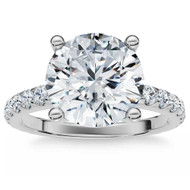
IGI vs GIA for Lab-Grown Diamonds: Which Certification Should You Trust?
Sep 25, 2026
If you've spent any time researching lab-grown diamonds, you've probably run into two names — IGI and GIA — and wondered which one actually matters. The short answer: both are legitimate, but for lab-grown diamonds specifically, they are not interchangeable. Understanding the difference can save you from overpaying, from buying a diamond graded on the wrong scale, or from dismissing a perfectly graded stone because the certificate looked unfamiliar. This guide breaks down exactly what each lab grades, where their standards diverge for lab-grown diamonds, and what you should look for on the certificate before you buy.
What IGI and GIA Actually Are
Both the International Gemological Institute (IGI) and the Gemological Institute of America (GIA) are independent diamond grading laboratories. Their job is to assess a diamond's quality using standardized criteria and issue a report — commonly called a certificate — that documents those findings. Neither lab sells diamonds. Their value comes entirely from the reliability of that report.
GIA has been operating since 1931 and is widely credited with creating the modern 4Cs grading system — cut, color, clarity, and carat weight. For decades, when people said "diamond certification," they meant GIA. That history matters, but it also means GIA's reputation was built almost entirely on natural diamonds. IGI, founded in 1975, has long been active in both natural and synthetic gem grading and made a deliberate strategic investment in lab-grown diamond certification well before GIA did.
That timing difference changes everything about how each lab grades lab-grown diamonds today.
The GIA-Is-Better Myth — and Why It Does Not Apply Here
The assumption that GIA is always the gold standard comes from the natural diamond market, where it largely holds true. GIA's grading for natural diamonds is widely respected for its consistency and conservatism — GIA tends to grade stricter than some competing labs, which historically reassured buyers that a GIA G-VS1 was exactly that.
When it comes to lab-grown diamonds, though, GIA arrived late. The lab only began issuing full 4Cs grading reports for lab-grown diamonds in 2020. Before that, GIA issued "origin reports" that identified a stone as lab-grown but did not assign the same color and clarity grades used for natural diamonds. That is a significant gap — and the market filled it with IGI.
There is also a grading scale difference that catches buyers off guard. GIA uses a color grading scale for lab-grown diamonds that maps to their natural diamond scale but applies it differently — the reporting format has changed over time and is not yet as uniformly adopted across retailers as IGI's is. IGI has issued consistent, full 4Cs reports for lab-grown diamonds for well over a decade, and the industry has standardized around them. When a jeweler says a lab-grown diamond is "IGI certified," every buyer, retailer, and appraiser in the market understands exactly what that means.
How IGI and GIA Grade Lab-Grown Diamonds: A Side-by-Side Look
| Factor | IGI | GIA |
|---|---|---|
| Years grading lab-grown | 15+ years | Since 2020 (full reports) |
| Full 4Cs report available | Yes | Yes (since 2020) |
| Industry adoption by lab-grown jewelers | Dominant standard | Growing, not yet dominant |
| Certificate cost to manufacturer | Lower | Higher |
| Turnaround time | Faster | Slower |
| Color/clarity grading consistency for lab-grown | Well-established, consistent | Developing, evolving standards |
| Resale recognition | Universally recognized | Recognized, less standardized for lab-grown |
The cost difference matters to buyers because it flows through to the final price. An IGI certificate for a lab-grown diamond costs manufacturers less to obtain than a GIA certificate. That saving gets passed on, which is one reason IGI-certified lab-grown diamonds are frequently priced more accessibly without any compromise in quality. You are not paying less because the diamond is worse. You are paying less because the certification overhead is lower.
What the Certificate Actually Tells You
Whether a lab-grown diamond comes with an IGI or GIA report, the certificate documents the same core information: the 4Cs grade (cut, color, clarity, carat), the diamond's dimensions, the growth method (HPHT or CVD), and a unique report number that can be verified on the lab's website. Some reports also include a plotting diagram of the diamond's inclusions and a fluorescence grade.
When reading an IGI certificate for a lab-grown diamond, here is what to pay attention to:
- Report Number: Verify it at igi.org. If the number does not match the stone in hand, walk away.
- Growth Method: CVD (Chemical Vapor Deposition) and HPHT (High Pressure High Temperature) are the two common methods. Neither is inherently better — this is a preference and transparency point.
- Color Grade: IGI uses the same D-to-Z scale as natural diamonds. For lab-grown, D-F is colorless, G-J is near-colorless. Most buyers targeting value land in the G-H range.
- Clarity Grade: FL through I3. Lab-grown diamonds frequently achieve higher clarity grades at lower prices than their natural counterparts — this is a genuine advantage of the technology.
- Cut Grade: For round brilliants, look for Excellent or Very Good. Cut affects brilliance more than any other factor.
The same reading logic applies to a GIA report. The difference is that GIA's lab-grown color reporting has gone through multiple format changes since 2020 — some earlier GIA lab-grown reports use descriptive color language rather than letter grades, which can create comparison confusion when you are shopping across multiple sources.
Does It Matter Which Lab Certified Your Diamond?
For natural diamonds, many experienced buyers have a strong preference for GIA. For lab-grown diamonds, the situation is different, and the answer is more nuanced.
IGI-certified lab-grown diamonds represent the vast majority of the market for good reason. The lab has built specific expertise in grading synthetic stones, its standards are well understood across the trade, and its reports are the reference point appraisers and resellers use when evaluating lab-grown stones. If you buy a lab-grown diamond from a reputable online jeweler — including EX3 Diamond — the diamond is almost certainly IGI certified. That is not a compromise. It is the industry standard.
What matters more than which lab issued the certificate is the grading itself. A well-cut, IGI-certified G-VS2 round brilliant is an excellent purchase. A GIA-certified stone of equivalent grade is also excellent. The difference between the two certificates for lab-grown diamonds is smaller than the marketing around natural diamonds has led most buyers to believe.
Where you should be cautious: any lab-grown diamond that carries a certificate from a lesser-known or unverifiable lab. Some manufacturers use in-house grading or obscure third-party labs to inflate apparent quality. If you cannot verify the certificate on the lab's public website with a report number, treat that stone as ungraded for practical purposes.
The Buying Decision: What to Look for in an IGI-Certified Lab-Grown Diamond
For most buyers spending between $1,000 and $5,000 on a lab-grown engagement ring, IGI-certified diamonds offer the best combination of verified quality, market recognition, and price efficiency. Here is a practical buying framework:
- Color: Target G or H for near-colorless appearance at significant savings over D-F stones. The difference is imperceptible to the naked eye once the diamond is set.
- Clarity: VS2 or SI1 is the sweet spot. Lab-grown diamonds in this range are eye-clean at a fraction of the cost of FL or VVS stones.
- Cut: Do not compromise here. Excellent cut maximizes brilliance and is where the diamond earns its beauty. A D-color, Excellent-cut stone will outshine an F-color, Good-cut stone every time.
- Carat: Lab-grown diamonds allow you to buy more carat weight for the same budget. A 1.5ct IGI-certified stone is achievable at prices that would only get you a 0.5ct natural diamond of equivalent quality.
All lab-grown diamonds at Pompeii3 come with IGI certification, which means every stone has been independently verified and documented before it reaches you. The certificate travels with the stone, and the report number can be confirmed at any time. That transparency is the point.
The Bottom Line
GIA built its reputation on natural diamonds. IGI built its expertise on lab-grown ones. For the specific question of which certification to trust when buying a lab-grown diamond, IGI is the industry standard — not because GIA is untrustworthy, but because IGI has been doing this longer, more consistently, and at a scale that has made it the reference point for the entire lab-grown market.
When you see an IGI certificate on a lab-grown diamond, that is not a consolation prize. It is exactly what serious buyers and trade professionals look for. Verify the report number, review the 4Cs grades, check the cut above all else, and buy with confidence.
Ready to browse IGI-certified lab-grown diamonds? Explore Pompeii3's engagement ring collection — every stone is independently graded and every certificate is verifiable.