 Round
Round Princess
 Oval
Oval Cushion
 Emerald
 Marquise
 Pear
Pear Radiant
 White Gold
 Yellow Gold
 Rose Gold
 Platinum
 Engagement Rings
 Black Gold
 Tungsten
 Platinum
 Two Tone
 Wedding Rings
 Fine Jewelry
 Diamond Studs
 Silver
 Up To 80% Off
 JAN | Garnet
 FEB | Amethyst
 MAR | Aquamarine
 APR | Diamond
 MAY | Emerald
 JUN | Pearl
 JUL | Ruby
 AUG | Peridot
 SEP | Sapphire
 OCT | Opal
 NOV | Citrine
 DEC | Topaz
 Find The Perfect Gift
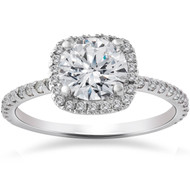
Moissanite vs Diamond Engagement Ring: Honest Comparison for 2026
Posted by Pompeii3 Inc on Sep 28, 2026
Moissanite vs Diamond Engagement Ring: Honest Comparison for 2026
Quick Answer: Moissanite and diamond are both excellent engagement ring stones, but they suit different priorities. Moissanite costs 70–90% less than a lab-grown diamond of the same size, shows more colorful fire, and scores 9.25 on the Mohs hardness scale (diamond is 10). Lab-grown diamonds are chemically identical to mined diamonds and have dropped about 90% in price since 2019, making a 1-carat lab-grown stone available for $800-$3,000 versus $4,000 or more for a natural diamond. Neither choice is wrong. The right stone is the one that fits your budget, your values and what you actually want on your hand.
Why This Comparison Matters More in 2026
Something quietly shifted in the engagement ring market over the past few years. Lab-grown diamond prices have fallen steeply, roughly 90% over six years according to Edahn Golan Diamond Research, and the old calculus of "moissanite or real diamond" has become a three-way decision.
Today the question is: moissanite, lab-grown diamond, or natural diamond?
Each occupies a genuinely different price tier, aesthetic profile and symbolic category. Getting the comparison right before you buy matters because engagement rings are not easy to swap out. This guide breaks down every meaningful difference so you can choose with confidence, not guesswork.
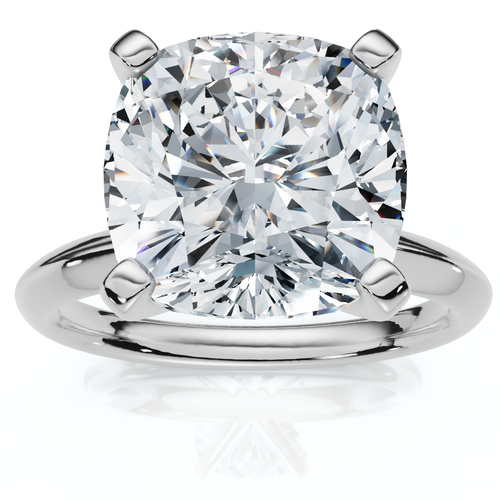
Moissanite vs Diamond vs Lab-Grown Diamond at a Glance
| Feature / Attribute | Moissanite | Lab-Grown Diamond | Natural Diamond |
|---|---|---|---|
| Price (1 ct equivalent) | $300–$800 | $800–$3,000 | $4,000+ |
| Hardness (Mohs) | 9.25 | 10 | 10 |
| Refractive index | 2.65 | 2.42 | 2.42 |
| Origin | Lab-created silicon carbide | Lab-created carbon | Earth-mined carbon |
| Passes diamond tester? | Sometimes (heat-based) | Yes | Yes |
| Resale value | Low | Low to moderate | Moderate to high |
| Carbon footprint | Very low | Lower than mined | Higher |
What Is Moissanite?
Moissanite was first discovered in 1893 by French chemist Henri Moissan inside a meteor crater in Arizona. The natural mineral, silicon carbide, is extraordinarily rare on Earth, so virtually all moissanite sold today is grown in a laboratory using a controlled thermal process.
The result is a stone that looks remarkably like a diamond but behaves optically in its own way. Moissanite's refractive index of 2.65 is actually higher than diamond's 2.42, meaning it bends light more aggressively. This produces the "rainbow fire" effect, flashes of spectral color, that moissanite is known for. Some buyers love it; others find it looks "too sparkly" or less like a traditional diamond under certain lighting.
Modern moissanite has also become nearly colorless. Earlier generations had a slight yellow or green tint. Today's premium stones from brands like Charles & Colvard are graded DEF (colorless) or GHI (near-colorless) and are visually very close to a high-quality white diamond in normal lighting. You can explore the full range of moissanite engagement ring styles at Pompeii3, including round brilliants, ovals, and cushion cuts.
The Real Price Difference in 2026
Price is where moissanite creates the most separation.
A high-quality 1-carat moissanite stone will typically run $300 to $800, depending on the brand and retailer. A comparable 1-carat lab-grown diamond is currently priced at $800 to $3,000. A 1-carat natural diamond with good cut, color and clarity starts around $4,000 and climbs quickly.
For buyers stretching a budget, moissanite opens up ring styles that would otherwise be out of reach. A halo engagement ring with a 2-carat center moissanite can cost the same as a modest diamond solitaire. Similarly, solitaire settings in moissanite let you prioritize stone size and metal quality without compromising on either.
Lab-grown diamonds occupy an interesting middle position in 2026. They've dropped so sharply in price that a 1-carat G/VS2 lab-grown stone can now be found under $1,000 at many retailers. That would have seemed impossible in 2020 according to Rapaport. That price collapse has narrowed the gap between lab-grown diamonds and moissanite more than most buyers realize, which makes careful comparison more important than ever.
Brilliance and Fire: How Each Stone Looks
"Sparkle" is not one thing. Gemologists distinguish between:
Brilliance: white light reflected back to the eye.
Fire: the dispersion of light into spectral colors (the rainbow flash).
Scintillation: the pattern of sparkle when the stone moves.
Diamonds are optimized for brilliance. Their refractive index and dispersion rate (0.044) produce a balance of white light and color that looks "clean" and classic, especially in a well-cut round brilliant solitaire.
Moissanite has a dispersion rate of 0.104, more than double that of diamond. Under direct light or in sunlight, it puts out considerably more colorful fire. This is a subjective call. Many buyers prefer it; others specifically want the more muted white flash of a diamond.
Lab-grown diamonds are optically identical to natural diamonds. If you want diamond look and behavior but not the natural diamond price, lab-grown is the path to take.
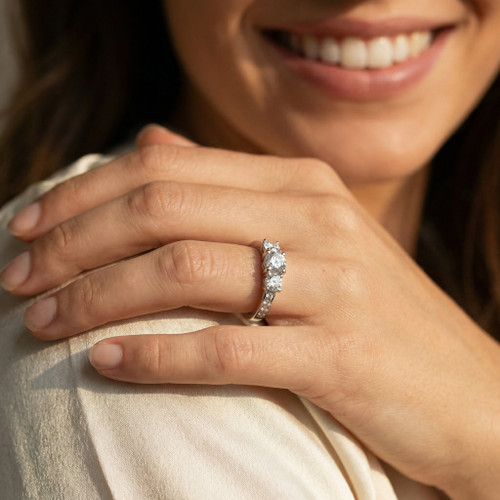
Durability: Will It Last a Lifetime?
Engagement rings take daily wear: hand washing, household tasks, the occasional bump. Durability matters.
Diamond, at Mohs 10, is the hardest naturally occurring substance. It will not scratch under everyday conditions.
Moissanite scores 9.25 on the Mohs scale, making it the second-hardest gemstone available for jewelry. For practical purposes, a moissanite ring worn daily will not show scratches or surface damage in any meaningful way over a normal lifetime of wear. The Gemological Institute of America notes that moissanite's toughness is excellent and it resists chipping and breakage well.
Both stones are appropriate for daily wear without reservation. The hardness difference between 9.25 and 10 does not translate to a practical durability concern for engagement ring wear. For guidance on metal choice, which also affects long-term wear, visit the Pompeii3 jewelry education center.
Lab-Grown Diamond vs Moissanite: The 2026 Context
The lab-grown diamond market changed faster than almost anyone predicted. Between 2019 and 2025, wholesale prices for lab-grown diamonds dropped roughly 80-90% as production scaled up dramatically, particularly from manufacturers in India and China. Paul Zimnisky Diamond Analytics has tracked this shift closely.
This has created a new buyer profile: someone who originally planned to buy moissanite because of its price advantage is now discovering that a lab-grown diamond might be within reach for only a little more money.
The trade-off worth considering: a lab-grown diamond is chemically and physically a real diamond. It carries the social and symbolic weight of "diamond" without any ambiguity. A moissanite is not a diamond. It is its own material, with its own distinct properties. Whether that distinction matters is entirely personal.
What does not change in 2026 is that lab-grown diamonds, like mined diamonds, hold limited resale value. Some retailers do offer trade-in programs, but the secondary market for lab-grown stones remains thin.
Which Stone Is Right for You?
There is no universally correct answer. Here is a decision framework that tends to work:
Choose moissanite if: You want the largest, most visually dramatic stone within a tight budget. You like colorful fire and do not mind, or prefer, that the stone is not a diamond. You want to minimize spend and maximize ring design. Start browsing at Pompeii3's moissanite collection.
Choose a lab-grown diamond if: You want a diamond with diamond's optical properties, hardness and social meaning, but not at natural diamond prices. You are comfortable with the fact that lab-grown resale value is low. See lab-grown diamond options at Pompeii3.
Choose a natural diamond if: The origin and permanence of an earth-formed stone matters to you. You value the possibility of some resale or heirloom value over time. You want a stone that carries traditional symbolic weight without any "but is it real?" conversations.
None of these choices is financially irresponsible or symbolically lesser. They reflect different priorities, all of them legitimate.
If you want to see both options before deciding, Pompeii3 offers virtual appointments where you can view stones side by side with guidance from a jewelry specialist.
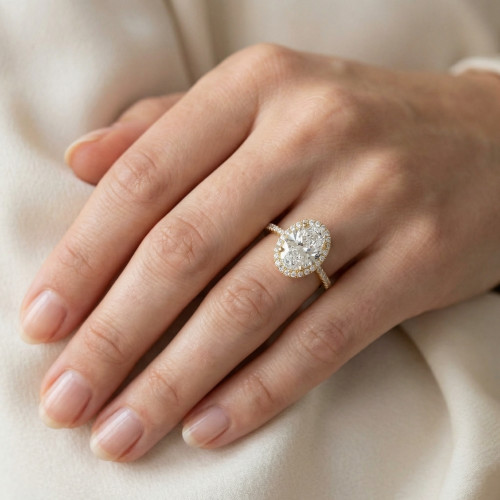
Shop Moissanite and Lab-Grown Engagement Rings
Pompeii3 carries both moissanite engagement rings and lab-grown diamond rings across a range of styles including solitaires and halos. Flexible financing options are available if you want to spread payments. For help sizing, the ring sizer guide is a free printable resource, and the jewelry education center covers diamond grading, metal choices and more.
Frequently Asked Questions
Is moissanite as good as a diamond for an engagement ring?
Moissanite is an excellent engagement ring stone on its own terms. It is nearly as hard as diamond, extremely durable for daily wear, and produces more colorful fire than a diamond of the same size. It is not a diamond. It is a different material with different optical properties. Whether "as good" depends on what you value. For budget, visual drama and durability, moissanite performs very well. For the status and meaning of a diamond specifically, moissanite does not replicate that. Browse moissanite engagement rings to see the full range of styles available.
Will moissanite pass a diamond tester?
Some early diamond testers that measure thermal conductivity will register moissanite as diamond because both conduct heat similarly. Modern multi-tester devices that also measure electrical conductivity will correctly distinguish moissanite from diamond. Jewelers using current equipment will identify moissanite accurately.
What is the main downside of moissanite?
The most commonly cited downside is the colorful rainbow fire that moissanite produces under direct light. Some buyers find it beautiful; others feel it looks less like a traditional diamond. The other consideration is that moissanite is clearly not a diamond if examined closely, which matters to some buyers and not at all to others.
Are lab-grown diamonds worth buying in 2026?
Lab-grown diamonds are chemically identical to natural diamonds and are certified by the same grading laboratories (GIA, IGI). Their prices have dropped dramatically, making them accessible at price points previously reserved for moissanite. The main consideration is resale value. Lab-grown diamonds do not hold value the way natural diamonds historically have, and the secondary market remains limited. For buyers who prioritize the diamond itself over resale potential, lab-grown diamonds represent strong value in 2026.
Can you tell the difference between moissanite and diamond with the naked eye?
In most lighting conditions and at normal viewing distances, moissanite and diamond look very similar to the untrained eye. The primary tell is the rainbow fire: moissanite will show more colorful spectral flashes under direct light compared to a diamond of the same cut and size. Side by side, the difference is more apparent. In normal social settings, most people cannot identify moissanite versus diamond by looking.
How does moissanite compare to a lab-grown diamond in price?
In 2026, a 1-carat round moissanite typically costs $300 to $800. A comparable lab-grown diamond runs $800 to $3,000 depending on cut, color and clarity grades. The gap has narrowed as lab-grown prices fell, but moissanite remains the more affordable option, often 60–80% less than a lab-grown diamond of similar size. Use Pompeii3's financing options to spread out costs on either stone type.
For more guidance on diamond grading, ring styles and what to look for when buying online, visit the jewelry education section at Pompeii3.com.
Sources:
- Edahn Golan Diamond Research, lab-grown diamond price trends: https://www.edahngolan.com/the-lab-grown-diamond-price-collapse/
- Rapaport, lab-grown price declines: https://rapaport.com/research/prices-of-lab-grown-diamonds-decline/
- Paul Zimnisky Diamond Analytics, lab-grown market data: https://www.paulzimnisky.com/
- Gemological Institute of America, moissanite properties: https://www.gia.edu/gems-gemology/fall-2015-moissanite-artificial-gem-comparison
- Charles & Colvard, moissanite grading: https://www.charlesandcolvard.com/pages/what-is-moissanite
Ready to Find Your Perfect Ring?
Browse Pompeii3's full collection of moissanite and lab-grown diamond engagement rings. Certified, conflict-free, and priced to fit real budgets.
Shop Moissanite Rings Shop Lab-Grown Diamonds