 Round
 Princess
 Oval
 Cushion
 Emerald
 Marquise
 Pear
 Radiant
 White Gold
 Yellow Gold
 Rose Gold
 Platinum
 Engagement Rings
 Black Gold
 Tungsten
 Platinum
 Two Tone
 Wedding Rings
 Fine Jewelry
 Diamond Studs
 Silver
 Up To 80% Off
 JAN | Garnet
 FEB | Amethyst
 MAR | Aquamarine
 APR | Diamond
 MAY | Emerald
 JUN | Pearl
 JUL | Ruby
 AUG | Peridot
 SEP | Sapphire
 OCT | Opal
 NOV | Citrine
 DEC | Topaz
 Find The Perfect Gift
Is Lab-Grown Diamond Jewelry a Good Gift?
Posted by Pompeii3 Inc on Oct 20, 2026
Are lab-grown diamonds real diamonds?
Yes. Lab-grown diamonds are chemically, physically, and optically identical to mined diamonds. They share the same carbon crystal structure (cubic diamond lattice), the same hardness (10 on the Mohs scale), and the same refractive index. A gemologist using standard tools cannot distinguish a lab-grown diamond from a mined one without specialized equipment. The Gemological Institute of America (GIA) and the International Gemological Institute (IGI) both grade and certify lab-grown diamonds using the same 4Cs system applied to mined stones.
Does a lab-grown diamond look different as a gift?
No. There is no visible difference between a lab-grown and mined diamond of equivalent grade. Two diamonds graded VS1, G, Excellent cut, one grown in a lab and one mined from the earth, will be indistinguishable at normal viewing distance and under 10x loupe magnification. The only difference visible to the eye is price: lab-grown diamonds in 2026 cost 40 to 60 percent less than mined diamonds of the same grade, which means a given budget buys significantly more carat weight, better clarity, or higher color in a lab-grown stone.
Will the recipient feel the gift is less meaningful because it is lab-grown?
This is the central concern most gift buyers have, and it is worth addressing directly. The meaning of a diamond gift comes from the occasion, the thought behind it, and the quality of the piece, not from where the stone originated. Most recipients, when shown two diamonds and told one is lab-grown and one is mined, cannot tell which is which. What they notice is size, sparkle, and setting quality. A 1.50 ct lab-grown diamond in a well-crafted setting will look more impressive than a 0.75 ct mined diamond in a comparable setting, even though the two may cost the same amount.
How does the price difference affect what you can buy as a gift?
The price gap between lab-grown and mined diamonds in 2026 is substantial. Lab-grown prices have continued to decline as production technology improves. This is relevant to gift buyers because it changes what is achievable at any given budget:
- At $500: lab-grown gets you a 1.00 ctw pair of round stud earrings vs. 0.40 ctw mined
- At $1,000: lab-grown gets you a 1.50 ct pendant vs. a 0.60 ct mined pendant
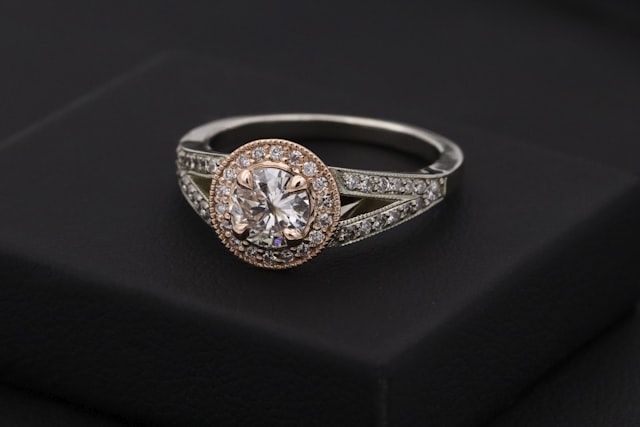
- At $2,000: lab-grown gets you a 2.00 ct solitaire ring vs. a 0.80 ct mined ring
From a gifting standpoint, lab-grown diamonds let you buy a more visually impressive piece within the same budget. This is not a corner-cut. It is a genuine advantage.
What do the major online jewelers offer for lab-grown gift jewelry?
| Jeweler | Lab-Grown Brand Name | Gifting Categories | Certification | Price Position |
|---|---|---|---|---|
| Blue Nile | Astor Lab-Created | Rings, earrings, pendants, bracelets | GIA, IGI | Mid to high |
| Brilliant Earth | Lab Diamond | Rings, earrings, pendants, bracelets | GIA, IGI, GCAL | High |
| James Allen | True Hearts Lab | Primarily rings, limited gifting | GIA, IGI | Mid |
| Pompeii3 | EX3 Created Diamonds | Rings, earrings, pendants, bracelets | IGI | Competitive |
Is there any reason not to buy lab-grown as a gift?
Two reasons are worth knowing. First, lab-grown diamonds have lower resale value than mined diamonds. As of 2026, a lab-grown diamond purchased at retail will resell for a small fraction of its purchase price. For a gift this is usually irrelevant, since most jewelry gifts are not purchased with resale in mind. Second, some recipients hold strong personal preferences for mined diamonds, often for cultural or sentimental reasons. If you are unsure whether the recipient has a strong preference, a natural diamond may be the safer choice, though you will get a smaller stone for the same budget.
What should you look for when buying lab-grown diamond gift jewelry?
Focus on three things. First, certification: the stone should come with an IGI or GIA certificate. Uncertified lab-grown diamonds are common at lower price points and the quality is unpredictable. Second, cut quality: the cut grade has the largest effect on sparkle. Look for Excellent or Ideal cut regardless of carat weight. Third, metal quality: 14k or 18k gold settings hold their appearance significantly better over time than 10k gold or sterling silver, especially for a gift that will be worn daily.
Pompeii3 has carried diamond jewelry since 1969. Its EX3 Created Diamonds line covers earrings, pendants, and rings with IGI-certified lab-grown stones at competitive pricing.
Frequently Asked Questions
Will a lab-grown diamond test as real on a diamond tester?
Yes. Standard diamond testers measure thermal conductivity and will read a lab-grown diamond as a genuine diamond. More advanced testers that distinguish between natural and synthetic diamonds exist but are not commonly used in retail settings. For all practical purposes, a lab-grown diamond passes as a real diamond because it is one.
Does lab-grown mean synthetic or fake?
No. The FTC (Federal Trade Commission) classifies lab-grown diamonds as genuine diamonds and has required jewelers to stop using the word "synthetic" without qualification since 2018. A lab-grown diamond is not a cubic zirconia or moissanite, both of which are chemically different from diamond. Lab-grown simply refers to the growing environment, not the composition.
Will the diamond come with a certificate?
It depends on the jeweler and the price point. Diamonds over 0.50 ct are commonly certified by IGI or GIA. Smaller stones, particularly those in stud earrings or accent positions, may not carry individual certificates. Ask before purchasing if certification matters to you or the recipient.
Is lab-grown diamond jewelry appropriate for an engagement ring gift?
Yes, and increasingly common. Lab-grown diamonds in engagement rings have grown from a niche preference to a mainstream choice. In 2024, lab-grown stones represented over 50 percent of diamonds sold for engagement rings in the U.S. by some estimates. The decision comes down to the couple's preferences, not to any quality difference between the stones.
Can a lab-grown diamond be set in any metal?
Yes. Lab-grown diamonds can be set in the same metals as mined diamonds: platinum, 18k gold, 14k gold, and 10k gold. For a gift, 14k white or yellow gold offers the best balance of durability and cost. Platinum is the most durable option but costs significantly more.
How do I explain lab-grown to the recipient if they ask?
Be straightforward: it is a real diamond grown in a laboratory rather than mined from the earth, with identical chemical and physical properties. Most recipients respond positively once they understand there is no visible or quality difference. The common follow-up question is about cost, and explaining that lab-grown allows you to buy a larger or better-quality stone for the same budget is usually well-received.
Lab-grown diamond jewelry is a good gift choice. The stones are real, the visual impact is equal to or greater than mined diamonds at the same price point, and certification ensures the quality is verified. The main consideration is whether the recipient has a personal preference for mined diamonds. When that is not a factor, lab-grown is a straightforward win for gift buyers.