 Round
Round Princess
 Oval
Oval Cushion
 Emerald
 Marquise
 Pear
Pear Radiant
 White Gold
 Yellow Gold
 Rose Gold
 Platinum
 Engagement Rings
 Black Gold
 Tungsten
 Platinum
 Two Tone
 Wedding Rings
 Fine Jewelry
 Diamond Studs
 Silver
 Up To 80% Off
 JAN | Garnet
 FEB | Amethyst
 MAR | Aquamarine
 APR | Diamond
 MAY | Emerald
 JUN | Pearl
 JUL | Ruby
 AUG | Peridot
 SEP | Sapphire
 OCT | Opal
 NOV | Citrine
 DEC | Topaz
 Find The Perfect Gift
Tungsten vs Titanium vs Gold vs Platinum: Which Metal Is Best for a Men's Ring?
Jun 18, 2026
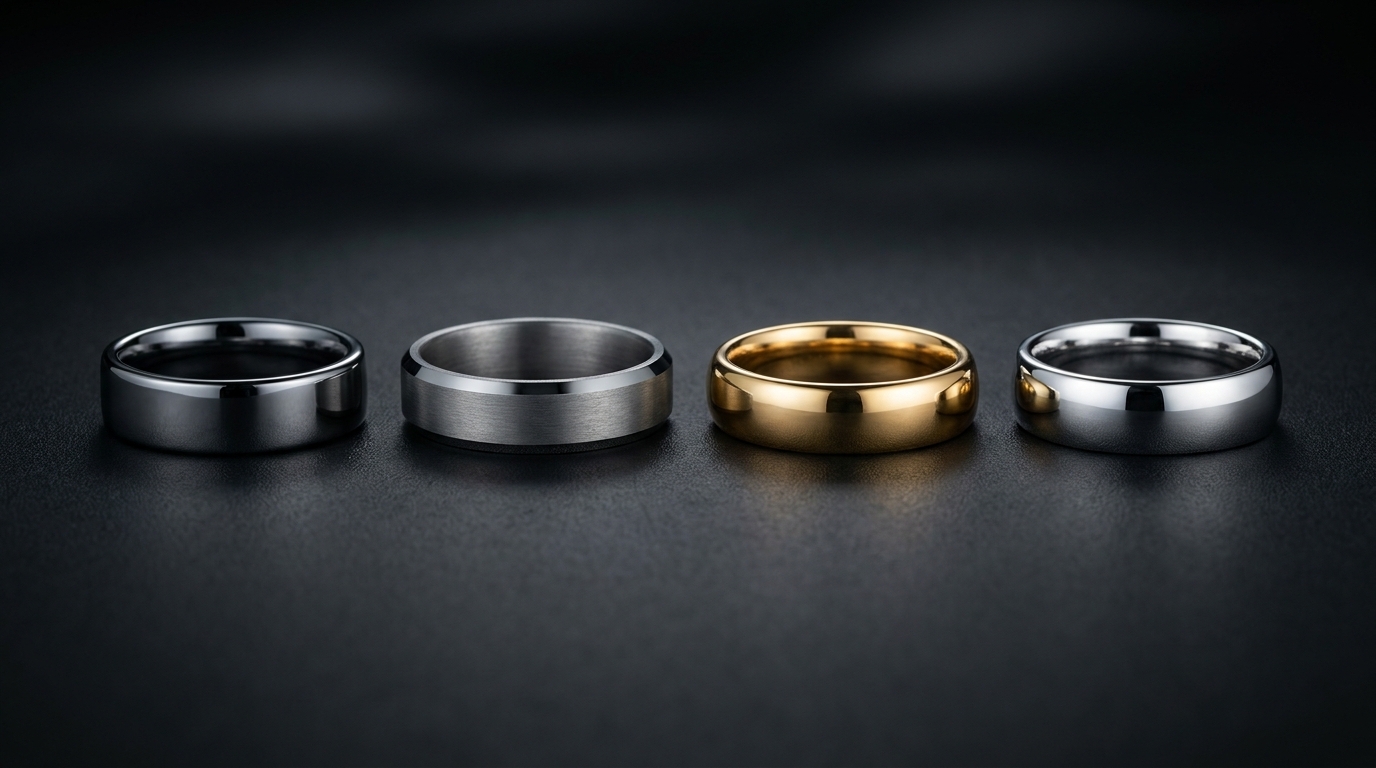
Choosing a man's ring usually comes down to one decision before style ever enters the picture: the metal. That single choice sets the price, the weight on his hand, whether the ring can be resized later, and how it will look after years of daily wear.
Most men compare four options: tungsten, titanium, gold, and platinum. Each wins on something and loses on something else, so the "best" metal depends on his lifestyle, budget, and whether you want a ring that lasts a lifetime or one you may replace.
This guide compares all four of the factors that actually matter, with real numbers, so you can pick with confidence.
Tungsten is the hardest and most scratch-resistant but cannot be resized and can crack. Titanium is lightweight, hypoallergenic, and affordable but scuffs and cannot be resized. Gold and platinum are softer and cost more, yet they can be resized, repaired, and hold real resale value. For a long-term heirloom ring, gold or platinum is the safer choice; for a tough, low-cost everyday band, tungsten or titanium wins.
Key Takeaways
- Tungsten carbide rates about 9 on the Mohs hardness scale, roughly 10 times harder than 18k gold, so it resists scratches better than any common ring metal.
- Tungsten and titanium rings cannot be resized; gold and platinum can be resized and repaired by almost any jeweler.
- The average men's wedding band costs around $600, with most falling between $400 and $1,000.
- Gold and platinum hold resale and intrinsic value; tungsten and titanium do not.
- Match the metal to his lifestyle: hard physical work favors tungsten or titanium, while a lifetime ring he can resize favors gold or platinum.
How hard and scratch-resistant is each metal?
Hardness decides how a ring looks after years of wear, and the differences are large. On the Mohs scale, gold sits at about 2.5 to 3 and platinum at roughly 4 to 4.5, while titanium reaches 6 and tungsten carbide hits around 9, according to Steven G Designs' Mohs hardness breakdown.
To put that in context, Jewelry by Johan notes that tungsten carbide is about 10 times harder than 18 karat gold and four times harder than titanium, surpassed only by diamond.
Pure gold is too soft for daily wear, which is why rings use alloys. Higher karat gold is softer because it contains more pure gold, so 14k gold is harder than 18k gold, as Steven G Designs explains. If scratch resistance is your top priority, tungsten wins by a wide margin, with titanium a clear second. For a deeper look at how karat affects durability, see our guide on 10K vs 14K vs 18K gold for men's jewelry.
Can the ring be resized later?
This is the factor most buyers overlook, and it matters more than hardness over a lifetime. Fingers change size with age, weight, and even weather.
Gold and platinum can be resized by almost any jeweler, according to Calla Gold Jewelry. Tungsten and titanium cannot be resized at all. If his finger size changes, he will need to buy a new ring.
For a wedding band meant to last decades, resizability is a strong argument for a precious metal. If you are buying a lower-cost gift or a backup band for travel and work, the lack of resizing matters less. (If you are unsure of his size, our ring size guide covers how to measure it.)
What about weight, comfort, and skin sensitivity?
Weight is personal. Platinum is dense and heavy, which some men love and others find tiring. Tungsten also feels substantial and heavy, while titanium is famously lightweight, so light that many wearers say they barely feel it, per Calla Gold.
For sensitive skin, titanium and platinum are naturally hypoallergenic. Gold can contain alloy metals like nickel that irritate some people, so a higher-purity or nickel-free gold is the safer route for sensitive wearers.
How much does each metal cost?
Price is often the deciding factor, and the spread is wide. The average men's wedding band costs about $600, with most rings landing between $400 and $1,000, according to Gentle Bands.
Material drives most of that difference. With Clarity reports that alternative metals like titanium and tungsten typically run $100 to $500, while traditional gold or platinum bands often cost $500 to $1,500. Add-ons stack on top: engraving usually adds $25 to $50, and gemstones can add $500 to $2,000.
There is also long-term value to weigh. Gold and platinum hold intrinsic and resale value, while tungsten and titanium do not. A precious-metal ring is part jewelry, part stored value; an alternative-metal ring is purely functional.
One 2026 pricing note worth checking before you assume gold is the cheaper precious metal. As of June 18, 2026, spot gold sits near record highs around $4,262 per ounce, while platinum trades around $1,723 per ounce. With that gap, a heavier gold band can land close to (or above) a comparable platinum one, so compare the two by current price rather than by reputation.
Metal comparison at a glance
|
Factor |
Tungsten |
Titanium |
Gold |
Platinum |
|
Mohs hardness |
~9 |
6 to 7 |
2.5 to 3 |
4 to 4.5 |
|
Scratch resistance |
Excellent |
Good |
Low |
Low to moderate |
|
Resizable |
No |
No |
Yes |
Yes |
|
Weight |
Heavy |
Very light |
Moderate |
Heavy |
|
Hypoallergenic |
Usually |
Yes |
Depends on alloy |
Yes |
|
Typical price |
$100 to $500 |
$100 to $500 |
$500 to $1,500 |
$500 to $1,500+ |
|
Holds resale value |
No |
No |
Yes |
Yes |
Hardness and price figures above are drawn from Steven G Designs, Calla Gold, and With Clarity.
The tungsten safety point most guides skip
A common myth says tungsten cannot be removed in an emergency. The opposite is true, and it is actually a safety feature. Tungsten rings are designed to fracture rather than bend. Gentle Bands explains that emergency responders crack a tungsten ring off with vice grips, usually in three or four squeezes.
That matters in a real injury. A gold or platinum ring will bend into a crushed finger, while a tungsten ring shatters and falls away, reducing the risk of further injury, per Gentle Bands. The tradeoff is the same one that makes tungsten scratch-proof: it is hard but brittle, so a sharp drop or hard impact can crack it.
Which metal should you choose? (with real examples)
Use his daily life as the deciding test.
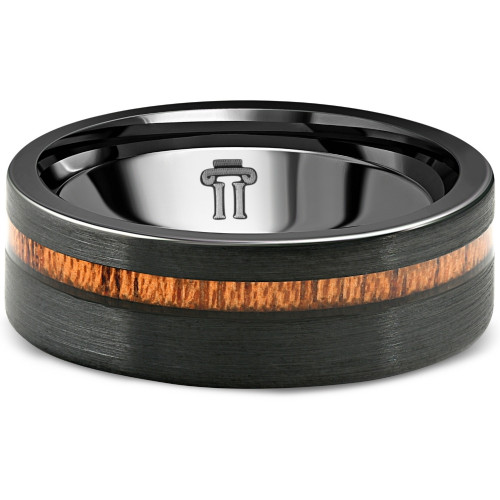
Choose tungsten if he works with his hands, is hard on his belongings, and wants a heavy ring that stays shiny for years. Accept that it cannot be resized and can crack on hard impact. Pompeii3's tungsten range runs from a clean Black Polished Tungsten Comfort-Fit Band to character pieces like the Brushed Tungsten and Genuine Wood Band and the Blue Tungsten Meteorite Inlay Band.
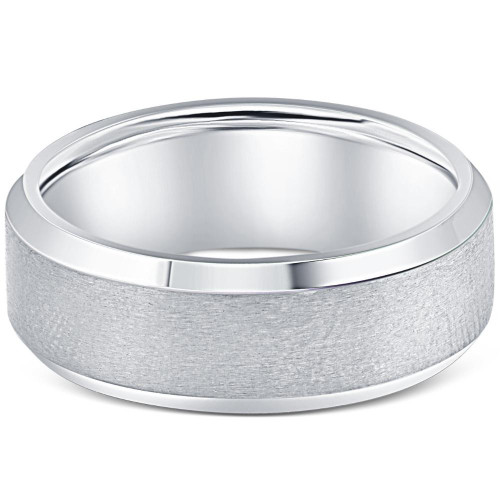
Choose titanium if he wants a tough, hypoallergenic ring that feels barely there, at a low price. Expect minor scuffs over time and no resizing. The Men's Brushed Titanium 8mm Moissanite Band adds a little sparkle without the diamond price.
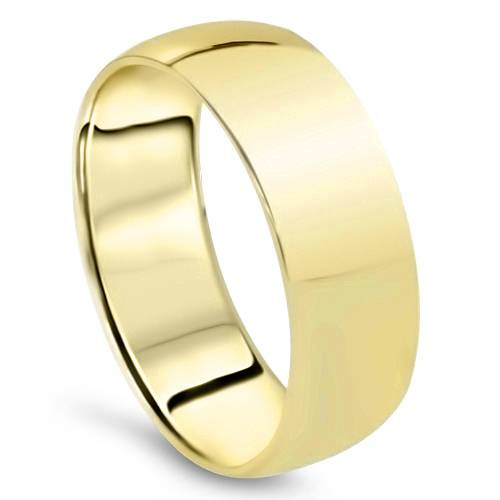
Choose gold if he wants a traditional, warm-toned ring with real value that can be resized and repaired for life. Pick 14k for a harder, more durable option than 18k. The Men's Brushed Wedding Band in 14k Gold is a versatile everyday choice (and is offered in platinum too).
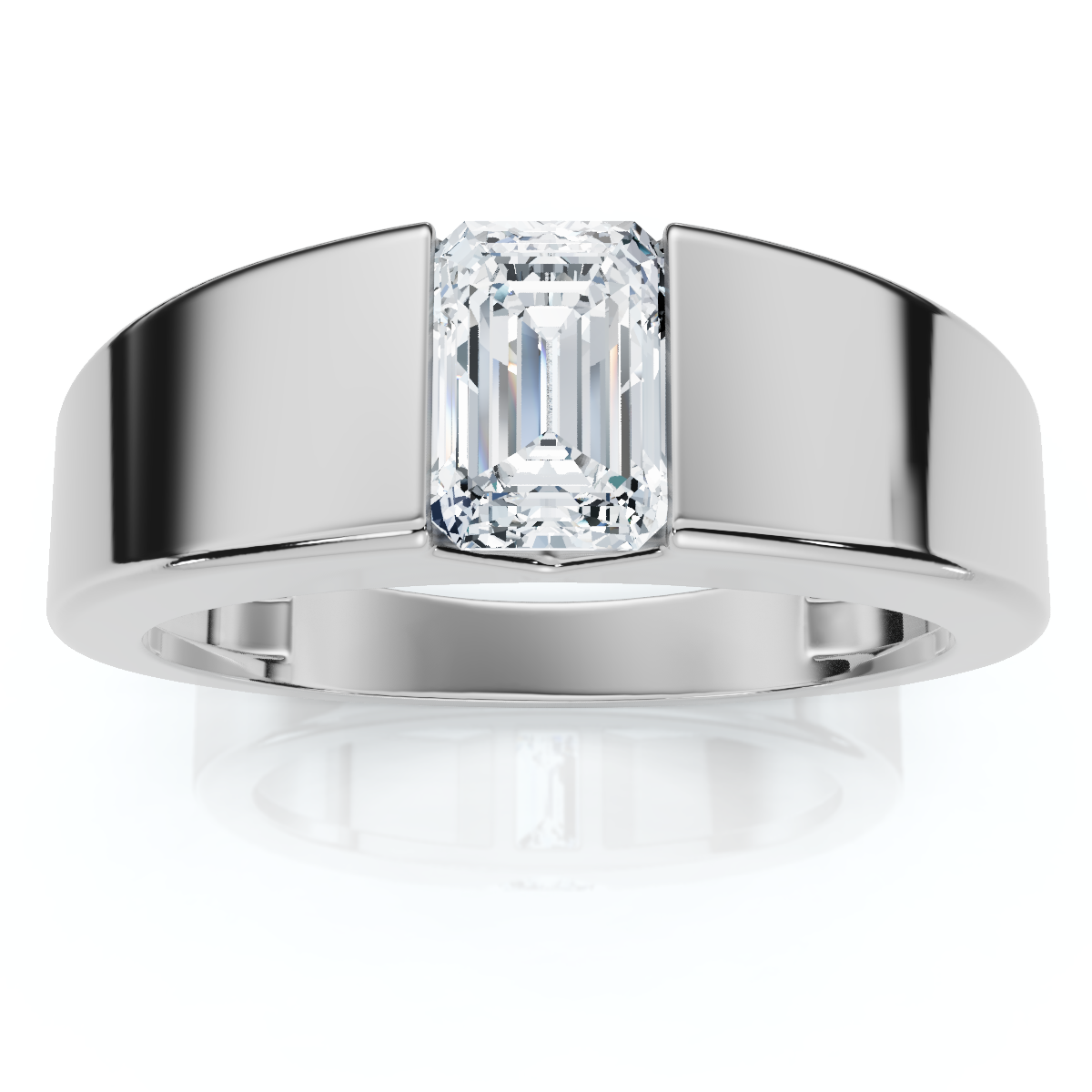
Choose platinum if he wants the most premium white metal, naturally hypoallergenic and resizable, and does not mind the weight. The Men's 6mm Flat 950 Platinum Comfort-Fit Band and 8mm 950 Platinum Comfort Band are solid platinum at direct pricing, which is worth comparing against gold given the 2026 price gap above.
For a once-in-a-lifetime wedding band or a milestone gift, gold and platinum reward you with longevity, repairability, and lasting value. For a rugged everyday or work band, tungsten and titanium deliver durability at a fraction of the cost.
Which Ring Should You Buy? One Pick Per Metal
What to look for when you buy
A good men's ring should come with more than a metal name. Look for a jeweler that offers certified diamonds when stones are involved, clear sizing help, the option to add a diamond accent or engraving, and a warranty.
Pompeii3 specializes in precious-metal men's rings, with men's diamond wedding bands in gold and platinum, brushed men's bands including a titanium option, and two-tone styles that mix metals in one ring. As a direct manufacturer making pieces in-house in the USA, it keeps the markup off precious-metal bands where most of the cost is the metal itself. Each piece is backed by in-house manufacturing, a product warranty, financing, and custom design if you want to build the ring around his exact style. You can learn more about the metals and stones on the jewelry education page.
Frequently Asked Questions
What is the most durable metal for a men's ring?
Tungsten carbide is the most scratch-resistant, rating about 9 on the Mohs scale, roughly 10 times harder than 18k gold. The tradeoff is that it can crack on hard impact and cannot be resized.
Can tungsten and titanium rings be resized?
No. Neither tungsten nor titanium can be resized. If his finger size changes, he will need a new ring. Gold and platinum can be resized by almost any jeweler.
How much should I spend on a men's wedding band?
The average is around $600, with most bands costing between $400 and $1,000. Alternative metals like titanium and tungsten run $100 to $500, while gold and platinum usually cost $500 to $1,500.
Is gold or platinum better for a men's wedding band?
Both can be resized and repaired and hold value. Platinum is naturally white, hypoallergenic, denser, and pricier by reputation, though at 2026 prices a heavy gold band can cost as much or more. Gold is warmer in tone and offered in karat options, with 14k being harder than 18k.
Can a tungsten ring be removed in an emergency?
Yes. Tungsten rings are removed by fracturing them with vice grips, usually in a few squeezes. Because tungsten shatters instead of bending into the finger, many consider it safer in a crush injury.
Which metal is best for sensitive skin?
Titanium and platinum are naturally hypoallergenic. Gold can contain alloys like nickel that irritate some people, so choose a higher-purity or nickel-free gold if skin sensitivity is a concern.
The bottom line
The best metal for a men's ring is the one that fits his hands and his life. Tungsten and titanium win on toughness and price but cannot be resized, while gold and platinum cost more yet offer resizing, repair, and lasting value, which is why they remain the standard for a lifetime band.
Ready to choose? Compare Pompeii3's men's diamond wedding bands in gold and platinum, or start a custom design to build his ring in the exact metal and style he will wear every day.